Friday, October 31, 2008

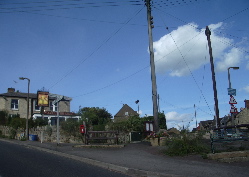
Stan's great speech about Randwick Village Hall

Randwick Village Hall recently opened it's doors to show folk the measures undertaken to turn it into the countries first carbon neutral village hall - now Wap Mayor Stan Giles (see photo) has kindly given permission to publish here a copy of the notes for his speech - I loved hearing some of the background and wanted to share it wider with locals and others alike.

See write up of the hall opening here and here - and here Alan Tomlinson's speech about the measures undertaken and here more about the Open Homes weekend.

The hall has since been short-listed for a SW award - see here - anyway let's get to that speech....

Welcome everyone to a very special occasion. Thanks to the many who contributed ideas and support for the project- District Council, Green Shop and Philip Booth.

September is an auspicious month for the hall as so many important events appear to have occurred at this time of year.

The Hall started in March 1946, when The Randwick Village Hall and Playing field Fund was formed with Mr W.L.Paul of Longcourt as chairman. It took three years to raise the funds to purchase the field. Apart from dances, bazaars and whist drives, a donation of £47.00 was received from Randwick, Australia and £162.00 from the Combined Services Social Committee, an organisation which existed to improve the lives of service personnel after World War 2.

By April 1949, £800 had been raised (approx. £18.000 today) and a public meeting was called to finalise the details and plans, which included appointing new officers, and agreeing that the Parish Council should hold the land in trust. This was to ensure continuity and was obviously successful as there has been continuity ever since. The land, which is directly in front of the hall,was purchased from Mr. Wheeler for £250.00 (£5,700).

The following September there was an opening ceremony carried out by the Bishop of Gloucester- I’m afraid he wasn’t available today and neither was the Agent General of New South Wales, who represented Randwick Australia. An interesting reminder of those austere times - and perhaps a pointer for today - is a record in the minutes of the Secretary having to visit the “food office” “to obtain information on a ration allowance for the tea on September 10th.” Let us hope the W.I have been equally well organised.

There was still no Village Hall, however, and in 1951 the Church Room on the corner of the Lane became available and this was purchased and used for the next 11 years. In May 1952, the committee felt it had achieved its aims and a new committee was elected at a public meeting and soon became the Randwick Social Committee. Mr Scriven, Chair, Mrs. Wehner (vicar’s wife) Secretary and Mrs Ashmead as treasurer.

In 1957, £25.00 (£400.00) was transferred to a separate fund for building a new village hall. At the December AGM in 1958 new officers were elected ( Harry Keene-chair, Mr Axford- vice-chair, Mr H.A- Spud- Taylor Secretary, Mr Wheeler- asst secretary and Barton Haines as treasurer. The next five years were full of activity - dances, carol singing, horticultural show, bazaars and the legendary house to house collection every week to collect subscriptions of sixpence- 21/2p (40p today).

By March 1962 £2000.00 ( £30,500) had been raised and grants had been negotiated. In September - that month again - building started but there was a very severe winter and the work was delayed. The building was officially opened on 26th September 1963, 45 years ago within a week.

The cost of the hall, furniture, equipment and fees was £4,600 (£65,000) of which £2,500 (£35,000) had been raised in the village and the remainder funded by grants. The use of the hall increased and gave the impetus for several new organisations, including the Youth Club, Over 60s, Play Group and a re-formed Cricket Club. The Car Park was completed in 1965, the same year that planning commenced for an extension and the old village hall was sold. There is a particularly bureaucratic wrangle over the money, which took seven years to resolve and resulted in the Parish Council paying the committee £229.00 - the cost of a new roundabout.

So a new phase in the life of the Hall begins. In researching the hall, there seems to me to be two underlying themes which run through its history and are so indicative of life in our wonderful village, so recently celebrated on ITV through Alec Alder’s efforts.

The first theme is of community - throughout its development, villagers have been consulted, responses and anxieties respected and the hall adapted to changing demands and expectations of users. It is, in my opinion, one of the most beautifully sited halls in the county and the present improvements have been achieved with a positive impact on our environment and provide an example of environmentally sensitive development and improvement.

The other theme is the need for a committed, hard working and enthusiastic committee, members of which give their time and energies freely and willingly, and I feel the present committee more than adequately continue that tradition so a special thank you to Mort, Alan, Val and Harden for bringing plans and ideas to such a positive conclusion. Bring them forward for a round of applause.

And indeed there was much applause and then the ribbon cut to allow us to enter - 150 people attended the opening and over 400 visited the hall during the day.

Peak oil: greater threat than terrorism and short-term impacts of climate change

The Guardian reports that a study from the Peak Oil group shows the risk to the UK from falling oil production in coming years is greater than the threat posed by terrorism, according to an industry taskforce.

The 'The Oil Crunch' report warns that the problem of declining availability of oil will hit the UK earlier than generally expected - possibly within the next five years and as early as 2011 and then decline rapidly or collapse.

As regular blog readers will know, Peak Oil has been covered a fair bit on this blog - indeed only yesterday I mentioned it in relation to community resilience - anyhow all along the Government has been in denial - let us hope this is the wake up call they need as it is the first time a group of businesses has weighed into this debate. The report also argues strongly that the risk of an early peak in oil production poses a bigger threat to UK society than tightening gas supplies, terrorism or the short-term impacts of climate change. Wow that is serious stuff - all the more need for more Transition Stroud projects to show what is possible and for all of us to wake up to the need to move away from fossil fuel dependency rapidly....

After all as noted before Sweden plans to be free of oil dependence by 2020 - see more in this blog post here.

However while the Government is failing us on this there are signs they are getting more serious on climate change - all credit to all the campaigners who have lobbied for the change - The UK Parliament now has the world's first Climate Change Law upping the pressure on other European governments to legally commit to cut emissions and on the European Union to agree a strong climate and energy package (Finland is already working on a Bill). Plus they included aviation and shipping but unfortunately the bill does not limit the amount the UK can 'off-set' by purchasing credits from outside Europe - anyway more of that another day....there is still much to do and it shows into even more sharp contrast the Government's absurd plans to expand aviation. Anyhow time for work....

ooohps but before I go I meant to also mention that I will be forwarding info re this to the Council's financial officers - they look at all sorts of info to make judgments about the future so that they can budget - it is my view that like most Councils when it comes to fuel prices they are relying too much on Government and not enough on reports like the one above and the All Party committee looking at this issue.

Thursday, October 30, 2008

Talk in Stroud on threat to natural medicines and food

Story Image
I just came across a comment left on a previous blog of mine and wanted to publicise it more widely - the series of talks start with a look at a topic I have covered previously about the threat to natural medicines and food - I am not sure I can get to that talk but it looks like being worth a visit. Anyhow here it is:

Uncommon Knowledge is a brand new series of talks and presentations at the Painswick Inn Project, Gloucester Street, Stroud. The regular events, organised by Christopher Hill and Theresa Johnson, will bring together top speakers from different fields under a common theme:

“Many societies seem to be entering a period of transition, whether environmental, cultural or economic. We feel this is a good time to be raising questions, re-evaluating old perspectives, and looking at ourselves and the world with fresh eyes. We hope Uncommon Knowledge will provide a platform for new and exciting research that will entertain us and challenge some of our preconceptions.”

The series kicks off on Thursday 13th November at 7.15 pm with The Global Food and Drug Code, a presentation by Scott Tips and Ian R Crane. Scott is President of the US based National Health Federation (www.nhf.com) and author of the book 'Codex Alimentarius: Global Food Imperialism'. Independent researcher Ian R Crane is the author, presenter and producer of one of the best selling DVD's on the Codex agenda, focusing on what is being seen by many as an international threat by corporate industry and global organisations like the WTO (World Trade Organisation) to natural farming, global food standards and complementary health.

This topic is extremely pertinent following the recent revelation that, 'Gordon Brown and other European leaders are secretly preparing an unprecedented campaign to spread GM crops and foods in Britain and throughout the continent...', as reported in the 26th October edition of The Independent on Sunday (see my blog on that here). The following day the headline of the Daily Express screamed, 'PURPLE TOMATO CAN BEAT CANCER' (see above photo taken from their website). So it would seem that the 'campaign' is already underway.

Event organiser Christopher Hill said, “This will be Scott’s first public presentation in the UK, so we are particularly excited to welcome him to Stroud, home of the Biodynamic Agricultural Association.” Admission price is £4 on the night, and doors open at 7pm. See my blog previously on Codex here and re Ian Crane's talk in Stroud here.

Update this evening - see Green party comment on purple tomatos:
http://www.greenparty.org.uk/news/2008-10-28-GM.html

Resilient Communities: A Guide to Disaster Management

I read this report, 'Resilient Communities: A Guide to Disaster Management', by Richard Heinberg, a while back and forwarded it to the County's Disaster management folk - see report here - it is about how we help make communities better able to respond to the coming economic shocks from resource depletion, beginning with Peak Oil, and perhaps also to shocks from other causes (such as the ongoing subprime mortgage and credit collapse).
Resilience: The ability to recover quickly from illness, change, or misfortune; buoyancy; the ability to absorb shocks.
This is an area we could do better and goes to the heart of Green politics - District Councils are already working with their local parishes/communities to develop local community resilience plans and in Stroud we have the Think Tank set up locally with the District Council, Transition Stroud and others - important starts - and will allow many issues to be aired but we need much wider discussion. Central Government are about to provide guidance on Community Resilience as an outcome from the excellent Pitt Report earlier this year but I am again sure it will miss some key points...

It will certainly not go far enough as the Government has failed to even accept Peak Oil is a problem. Last month on You and Yours on Radio 4 John Hemming, Chair, All Party Parliamentary Group on Peak Oil and Gas, said: "We need to recognise … that there is a link between food and energy … we need to be much more orientated towards controlling the use of fossil fuel. I think the Government's not even doing as much as it intends to. The first problem … is denial. They estimate the global peak for hydro carbon production as being 2030 … if you start by denying there is a problem then it's not surprising they're not doing anything about it … (the Government is planning) for a growth in air transport, it's a farce … when there isn't … the fuel to power it."

Mr Hemming said, "Energy is going to be rationed by either price or by having tradable energy quotas. If it's rationed by price the poorer people will suffer to a far greater extent, it requires international action, one country can't resolve this on their own … when you look at the numbers game in terms of alternative energies they're all various partial solutions, it's not clear they add up to a complete solution therefore you have to look at how you equitably deal with the fossil fuel provision that we have. I think we need to focus more on quality of life rather than standard of living … what is critical is we need to look at an equitable way of dealing with scarcity … it's in everybody's interest to adjust their lifestyle to minimise their use of energy."

Good for him - my email to the County was batted back to me saying they will await Government guidance and suggested I talk to the new Climate Change Officer at the County - an understandable but disappointing response. Wouldn't it be great if instead they got serious and developed a plan like Portland, Oregon - see more here. Or a Green New Deal like Greens called for again locally this week - see here details plus talk at Sub Rooms on 27th November.

To create real community resilience to cope with disasters we need to cover all the issues from how and where we grow our foods to how we actually deal with the disasters themselves - but enough scribbling for now - it is a little too early to be putting all these thoughts together - off to work v soon...

Wednesday, October 29, 2008

Dismay at nursery fingerprint recognition door entry system

Earlier today I was commenting on this blog on the dire new appalling Communications Data Bill (see here) which proposes to record - for life - the details of everyone you call or write to and what websites you visit. Then later today I get a call to comment on news that Tiggers nursery at Downfield has installed a £10,000 fingerprint recognition door entry system! Sadly another aspect of our 'database state' that we are creating....

Photo: last of the Sweetpeas?

I didn't get back in time to the Stroud Life journalist as work was busier than usual today but did leave a comment on their website - part of it said: "By introducing this into nurseries, we are normalising fingerprint scanning and giving children the message that they are in danger by seeing their parents fingerprinted. There are no proven benefits of using this system. Even Microsoft's Identity Architect Kim Cameron has said that 'It is absolutely premature to begin using 'conventional biometrics' in schools'. Furthermore the Government have still to issue guidelines concerning the human rights implications of the use of biometrics in schools. While I recognise some parents fears this is not the way to deal with them." Read full release here.

Plan to log your visit Ruscombe Green

The latest outrageous plan by the Government to increase our database state is the Communications Data Bill - this proposes to record - for life - the details of everyone you call or write to and what websites you visit.

Photo: view of Ruscombe

This raises not just the prospect of a new, massively intrusive surveillance database, but - according to the Sunday Times - the possibility of compulsory registration of mobile phones. Negative media coverage has forced the Home Secretary to announce further 'consultation' on the Bill in the new year and a flat denial from the Home Office on mobile phone registration.

Monitoring your communications is in many ways more intrusive than searching your home. It should only ever be done under warrant with good reason. The general convenience of the Home Office is a very bad reason indeed.

As NO2ID ask: "Do you want the state (and anyone who can gain access to the system) to have a record of your religious and political beliefs, your sexual interests and relationships, your financial and medical worries - "just in case" they ever become of interest to the authorities? You wouldn't tolerate someone creeping into your home at any time, night and day, to go through your and your family's private things. You shouldn't put up with this."

See Open Democracy article here and NO2ID here - and make your thoughts known to our Government. This comes on top of news that the Home Secretary has brandished a new plastic card to be issued to some foreign residents from November - she is calling it an "ID card" for foreign nationals. This cynical branding exercise with its sly appeal to xenophobia should fool no-one.

As regular blog readers will know I have totally opposed the push for ID cards - indeed the Government have failed to convince industry and employers, the unions and the public at large that ID cards are necessary or desirable - now it seems they are picking on soft targets - anonymous individuals seeking marriage visas or education - those who have no choice but to keep quiet and comply. And if the statements of junior minister Meg Hiller at Labour Party conference are to be believed, they also intend to target children as young as 14.

Ministers try to give the impression that their National Identity Scheme is inevitable - It is most definiately not. All the opposition parties are committed to scrapping it and, without the National Identity Register (the database at the heart of the scheme) and with the repeal of the Identity Cards Act we can - and shall - go back to being a free country.

Locally Jeremy Hilton, Lib Dem MP for Cheltenham was reported in the paper re his anger at the scheme - his wife Polly, a Chilean woman who has lived in Gloucester for over a decade will have to get a card - and indeed my Norwegian partner who has lived in Stroud well over 20 years looks set to also need a card as Norway is not part of the EU. What utter nonsense and waste of money...

Tuesday, October 28, 2008

Play: 'When the Lights went out!'

Some will remember the Flood play earlier this year - a great success. Well I have just heard from Chris Garner, the artistic directorof the Stroud Theatre Company and a fellow Ruscombe-ite that there latest show is now touring.

It is coming to Edge Village Hall (26th Nov), The museum in the park (6th Nov), Stonehouse (25th Nov) as well as other venues throughout Glos and touring nationally. Check out their website for more info: www.stroudtheatrecompany.co.uk.

'When the Lights went out!' is by Mike Akers and a story celebrating the home front heroes - it is based on extensive research in Gloucestershire - drawing on the memories and stories of those who were there during the dark days of World War Two. Perhaps with the threats forecast to our power supplies in the future by some commentators this will be more than topical? Certainly I am looking forward to learning more about this time.
"Do not let us speak of darker days; let us rather speak of sterner days. These are not dark days: these are greater days - the greatest days our country has ever lived..."
Winston Churchill, 29th October 1941
For booking info call 01242 695571

Bank near Ash Lane: threat or improvement?

Many will remember the Planning appeal in Randwick earlier this year re the proposed house at Glenfield, Ash Lane (see more here).

Well the house has another planning application in: S.08/1740/FUL - for some reason I can't access the Council website to view it at the moment, but there is apparently a change to the plans. I will check them out but there is a very short time to respond - I think last comments need to be in by 3rd November - so I wanted to add this post here as this issue has led to lots of strong feelings in the past.

My concern has always been the loss of the bank - a move recommended by Highways - see my original objection here. I have spoken to planners and others about this and I understand this latest change is in response to my concerns and others raised previously by many villagers - this latest plan apparently does not cut the bank back so far - as noted I haven't seen the plans but I do have concerns that any sense of widening that stretch will in my view lead to faster cars and a loss of character to the neighbourhood - but I'll reserve judgement until I view the plans!

Monday, October 27, 2008

Action at last on dangerous Westrip Lane wall

Re the wall in Westrip Lane near Hawthorne Rise and opposite Red House Farm

Photo: part of the wall that is much more dangerous now

The wall has over the last years become increasingly dangerous. I had a site meeting there just under a year ago - see background to this story here - the good news is that after dozens of emails and several phone calls action is now underway - this week hopefully the wall will come down and made safe with further work to the area when a team becomes available.

And don't forget Puckshole is closed 28th to 31st as they are reservicing.

Future of Woodcutters Arms?

I can hardly believe that more than 2 years have gone by since the Woodcutters Arms in Whiteshill was put up for sale - see my blog here re the loss of pubs.

Photo: to year old photo before tarmac was converted back to a Village Green

Since then many have asked what my views are on this site and I have made no secret that I do not support a change of use to a home. However my view will have little effect on the planning process and I know from talking to others there are many who disagree with me as they would like to see the site developed. Here is roughly what I said to the local press when they asked last week:

I am concerned that we will loose another community facility from the village just at a time when climate change and oil prices mean that we should be supporting more local services. However I accept that to develop this site as a public house is unlikely to be attractive in the current economic climate - particularly as another pub is so close. However Stroud District Council policies (Policy SH15) state that there must be 'no prospect of a continued community use'. I have therefore requested more robust evidence to justify their case than currently provided.

The Christie and Co report dated 18th September 2008 that was submitted with the planning application along with other evidence supplied by the applicant certainly provides justification for questioning the viability of this pub as a business. It should be noted that no longterm lease was granted by Admiral and at no time in recent years have landlords been given a chance to develop the pub's business. Indeed there seems to have been precious little development or promotion of this pub in the past.


I am keen to see improvements made to this property, which has, what is arguably the most prominent site in the Village - it is situated in full view as you come up the hill and on our Village Green - it is deeply disappointing that planning laws seem to make it so diificult to insist that any development on the site is for affordable housing or some other community use. We need to keep villages alive - and yes of course it will be great to have an empty building full but this is not what is needed.

Having said all that I hear the proposed applicant is allegedly a stone mason and aims to restore it sympathetically. In the light of our planning laws not allowing for other possibilities this may well be a good solution.

Update 16th November 2008: This application is likely to go to Development Control Committee on 9th Dec following a letter of support from the Parish Council - also I had a comment sent re above: 'Mr Anderson is not an 'alleged' Stone Mason, he is fully qualified having served his apprenticeship on Westminster Abbey, his other experience speaks for itself, such as teaching Masons working on Woodchester Mansion, the lead Mason on the reconstruction event celebrating the moving of Abel Simble in Egypt....'

Planning details: S.08/1669/COU Woodcutters Arms, Main Road, Whiteshill - Change of use from public house to residential. See details here on SDC planning website
- comments can be made up to 5th November.

Government's secret push on GM

Yesterday The Independent on Sunday carried a story on Europe's secret plan to boost GM crop production - I wont repeat here other than to say it is worth a read as exposes how Gordon Brown and other EU leaders are secretly preparing an unprecedented campaign to spread GM crops and foods in Britain and throughout the continent.

Apparently minutes have been obtained by The Independent of a series of private meetings of representatives of 27 governments - disclose plans to "speed up" the introduction of the modified crops and foods and to "deal with" public resistance to them. This is shocking indeed but no surprise from this Government who carried out a consultation on GM that showed the public were against it yet nevertheless the Government have continued to push every which way to get GM here. Indeed Greens have locally tried to raise this issue several times - see most recently Fi MacMillan's letter this summer to local press - it seems we have to remain ever vigilant.

Even France, one of only three countries in Europe to have grown them in any amounts, has suspended their cultivation, and resistance to them is rising rapidly in the other two, Spain and Portugal. Currently only 0.119 per cent of Europe's agricultural land is GM. I hope there will be much outrage about this - we cannot open the GM Pandora's box.

Sunday, October 26, 2008

Village Shop: 10th Anniversary party today

I was delighted to get an invite to Whiteshill and Ruscombe's Village Shop 10th Anniversary party - 10 years of serving the community - all run by volunteers - a real birthday party with plenty of sandwiches, cream scones and of course a cake - see the photo left of the team of volunteers who keep this shop going ...

...especially Mary and her daughter Emma who made the wonderful cake - a close up reveals The Citizen gets an advert on the cake (see photo)! Indeed their photographer was there in his own time - he lives locally and is one of the many supporting this community shop.

The afternoon started with opening the new toilet - the old one suffered a fire a year ago (see here) - since then those in the shop, local school, playgroup and more have been raising monies to put it right - David Drew MP was there to cut the ribbon - in the case a stream of toilet roll!!

See photos - he also applauded all the hard work of those involved in keeping the shop going and indeed raising the money for the toilet. Indeed the community has been great on this.

Anyhow there was also a raffle - and the sun was out - maybe 50 people came to the party and the shop was festooned with cards from local children - and the cafe was serving drinks and wine - and of course there is the wonderful views across the valley - as I've said before this is the cafe with the best view in the county!

Anyhow I've rambled on long enough - it is a great achievement to reach 10 years - they had some of the photos from that time on the wall - see below the crane lifting the portacabin into position - see here an old news story that gives some background for those who don't know about it.

The Shop is still looking for volunteers to help run it and with all sorts from publicity and painting a new sign to perhaps a website designer? Give us a call if you are interested - and don't forget if you live local please support it - and don't forget while prices are in some cases a very little more than supermarkets it is basically cheaper than many corner shops and cheaper on lots than the local Tesco Express - I remember helping with a survey a long while ago looking at basket prices to promote the shop - see here.

Humphreys End Orchard part 2

Yesterday I blogged about our wonderful afternoon in Humphreys End Orchard picking and juicing apples - some 50 people plus joined in - for those who missed it and are interested we will again be doing it on Saturday 8th November 2pm to 5ish - but more exciting there are some long term plans for the orchard being explored - see below and also details of how to store apples and a bit of history re the orchard....

Sat 8th Nov

Julia Currie, the landowner is kindly opening her gates again to her orchard at the bottom of Ruscombe road (Bread Street) for folk to pick apples and get involved with trying some juicing. Several folk like Guy from Bread Street and myself will help with shaking trees - large sacks will be provided and when filled that will be £5 or bring your own carrier bags - supermarket size filled will be £2. Please call Julia 01453 764376 if you need any information especially re parking and juicing. Bring helmets!! A bike helmet would be good as some of the apples falling are seriously heavy - one split on my glasses leaving smears of juice another hit me full on the chest and a third on my head - one child also had one on the nose - no serious injuries but be warned apple picking can be dangerous!!

Something about this orchard

It has about 20 mature old trees and 25 planted saplings of Gloucestershire varieties. All unsprayed - here below is some info from Julia's leaflet:

This orchard has been in my family’s ownership (Martin) for at least 2 centuries. Unfortunately I know little about its earlier history, but it stems from a time when every village had its orchards and local residents were involved in the harvesting and use of the fruit.

In recent years English orchards have been in serious decline – the power of the supermarkets has led to the virtual eclipse of our thousands – yes thousands - of native apples. However, in the last few years we have thankfully begun to see not only the rescuing of these wonderful apple varieties, but a growth in demand for them. Farmers markets and local growers have fought back. Thankfully, due to this fight back, we have saved over 100 varieties of Gloucestershire apples

Over the last 6 years I have been restoring the orchard, pruning and cutting back overgrown trees and planting new ones. That process is ongoing, and you will be able to see all the 18 saplings at different stages of growth. All are local or Gloucestershire varieties with one or two exceptions and include Stroud’s own apple the Lodgemore. It will be some years before the saplings bear fruit of any quantity, but in the meantime, we can enjoy their growth and know that this wonderful orchard is providing a wild life haven for birds, insects and bats.

Some of the many things that orchards are good for:

- The trees are beautiful all year round with blossom in spring and fruit in autumn. The wood is great for fires and smells lovely

- Old orchards are a very important wildlife habitat for birds, insects, bats and fungi

- Orchards provide us with links to our past where they existed in every village and farm. They have provided us with sources for our language, poetry, songs, stories, art and games

- Today they can provide us with local varieties of fruit and juice, unavailable in supermarkets, and recreation and community activities in community orchards or where owners give access

And Now the Future

Here is more info from Julia's leaflet about plans:

I am hoping to increase community involvement in the orchard eg by renting or sponsoring the trees, planting new ones, sharing the produce, sharing in the maintenance and using the orchard for community activities.

If you are interested, please join us on the next open Saturday or call me on 755451.

Storage of your apples

This is something several people asked about - some of the apples from this orchard will store through to the new year. Again Julia had produced some useful info for novices like myself plus a recipe sheet:

· Ideally, store apples in a draught-free place such as a cellar, attic, garden shed, or unheated spare bedroom, away from bright light. Keep cool, preferably at below 45° F (7° C), and avoid fluctuations in temperature. Store in shallow, slatted trays, not quite touching, on newspaper and put sheets of paper between the rows. Trays can be stacked. Label each tray with the name of the variety .Examine fruits frequently for rot

· Another way – keep on flat surface on newspaper, slightly apart

· Alternatively, wrap apples individually in paper (colour supplement seems to work particularly well; let us hope the inks are not toxic), and put them in cardboard boxes which are then shut up. This seems to prevent the fruit shriveling, and keeps out the mice and rats (which can often be a problem).

· Fruit for cooking and jams can be deep-frozen. Some people blanch it first, others just freeze it. Use small freezer bags; otherwise a big load has to be defrosted just to get enough for a single pie.

Saturday, October 25, 2008

Huge success: apple juicing at Humphrey's End Orchard part 1

See the video at the bottom and photos of our wonderful afternoon today in the orchard at Humphrey's End. Some 50 people or more joined in the picking and juicing and plans are now afoot to set up some sort of community involvement in looking after the orchard (see initial ideas here that are progressing slowly).

Many helped with loosening the apples with a gentle but firm shake of branches - then it was washing the apples.

Next came the chopping of apples into quarters and then the grinder thing - has it got a special name - all including children helped with this - at times requiring the strength of Pippi Longstocking to turn the wheel.

The mush of ground apples then goes into the press in a muslin-like bag and the crank turned and turned to squeeze the juice.

Then out comes the juice - and wow what a juice - most of us tasted it there and then - a wonderful rich amber colour made from a mix of Newton Wonder and Blenheim apples. It was pretty labour intensive and with all hands we manged to create about 12 litres of the stuff - 2 of which I have here - of course it wont last so will need to be drunk within a couple of days - no problem with that!

It is probably the best tasting juice on the planet!

Anyhow more info about the day will be coming in another blog soon - hopefully tomorrow - including info on how to get involved with the project in the future......let me leave you with the video for now....OK not great quality but I am still learning this game!!

See more on my blog re Orchards here re Edwinna Bridgeman and here re Whiteshill Parish orchard.
video

US elections favour scary return to Republicans

I've not blogged on the US elections and don't really mean to start but note John Marjoram's letter in Guardian today here. He calls for them to consider more than just the Republican - Democrat fight...

Photos: This morning over Farmhill - a new dawn!

With that in mind I note Roseanne Barr comes out with some typically feisty comments re the US elections and her support for Cynthia Mc Kinney and the Greens here. See also Reactions of the Green Party Vice Presidential candidate to the Vice Presidential debate here.

In one shocking bit of news it emerged at the European Green Party Council that the General Secretary and the EGP had been in touch with the US Greens trying to get them not to campaign in the so called swing states for fear of damaging the Democrat campaign. The US Greens had told them where to get off. Agree!!! Can you imagine the US Greens telling the EGP not to campaign in the UK, as it might damage the Labour or Tory vote? The Gen Sec apparently went on to state that it was no longer an issue as the Democrats were sufficiently ahead in the swing states this time. Ah well Greens are not perfect!

Election stacked against Obama

Anyway more re the US elections - certainly this week the Republican election campaign has gone from one crisis to another with the seemingly barely competent Senator McCain and Governor Palin - the latter is now deliberately being kept away from the media as she shows her true colours as Mayor of Gaffe City.

However the US election is still stacked against Obama - the scale of voter disenfranchisement in America could put the Republicans back in the White House (see Peter Tatchell comment here). Naomi Wolf as seen on this blog earlier this month believes a coup has already taken place - see her scary video here.

Amazingly research by the New York Times (NYT) and BBC Newsnight confirms that the US presidential election will not be free and fair, because millions of electors will either not be allowed to vote or will not have their votes properly counted. The NYT found that in some states for every new voter registered in the last couple of months, two voters have been removed – negating Obama's massive voter registration drive. This voter purging could mean fewer people voting next month than voted in 2004. This widespread electoral malpractice is independently corroborated by a Newsnight investigation by Greg Palast. See here and here.

Palast says that almost three million voters have already been purged from the voter rolls – mostly poor and black voters who are more likely to vote Democrat. During elections in New Mexico earlier this year, one in nine voters found that their names had disappeared from the voter rolls. In Colorado, the disenfranchisement is even greater, with 20% of voters being purged. It has happened before. During the 2004 presidential election one in four registered Ohio voters turned up at the polling booth only to discover that their names were not on the voter roll, an exclusion rate of 25%.

The Republican strategist Karl Rove has backed a new law requiring voters to show photo ID at
the polling booth. One in ten US citizens don't have photo ID. Among African Americans it is one in five. This requirement will disenfranchise millions of poor, elderly and black Americans, who tend to vote Democrat. In one swing state, Indiana, an estimated 100,000 African-Americans may lose their right to vote (see more here).

Many will remember that voting irregularities in 2004 were enough to steal the presidency for the Republicans - see article by the civil rights lawyer Robert Kennedy Jr, JFK's nephew here.

What would Obama victory bring?

It is clear a McCain victory would have truly frightening foreign policy implications. However I can't say I am not also worried ny an Obama victory - many of his foreign policy statements have been less than reassuring. Indeed he sounds positively hawkish on Afghanistan. The occupation of Afghanistan is increasingly brutal. Reports of civilian deaths have been mounting as air bombardments become more intense. The occupation is in crisis, but the response in both the US and UK seems to be to order an escalation of the aggression. The outspoken General Dannatt is resigning early as chief of the General Staff and is replaced by the hawk Sir David Richards who supports a surge in Afghanistan including sending 5,000 extra British troops. Yet the British ambassador to Afghanistan, Sir Sherard Cowper-Coles, recently said that the US strategy in Afghanistan is destined to fail. "The coalition presence - particularly the military presence - is part of the problem, not the solution."

The only way to end this destruction is by the withdrawal of all foreign troops, a view shared by the vast majority of people in Iraq, Afghanistan, America and Britain.

Obama on injustices in the US is better than McCain but again no real programme for the one hundred million poor people and children in the US. But hey I wasn't intending to blog on all this - there are many more knowledgeable bloggers out there that will give you the low down on these elections.

Green bloggers on election night

I've been invited to join a network of Green bloggers at Green Change for an election night online party - sadly I wont be able to join them but others might be interested - see more here.

Huge fire in Cainscross: homes still being evacuated

Last night homes were being evacuated after a huge fire broke out at units behind the former Wycliffe garage site in Chestnut Lane, Cainscross just after 6pm. This morning homes are still being evacuated although I cannot see any smoke from the site now - poor people indeed.

Photo: Smoke yesterday evening pouring over Whiteshill and Farmhill - apols for poor quality

Apparently over 40 firefighters with crews from Stroud, Gloucester, Dursley and Chipping Campden were all called to the scene. 38 houses within 200 metres of the site were evacuated over fears about volatile gas being stored on the premises - some residents were taken to an emergency shelter which was set up at Stroud Leisure Centre. Thick black smoke and 20 metre high flames could be seen over Stroud and explosions from acetylene cylinders stored in the units were heard across the area.

Second flawed nuke consultation condemned

It's official, Brown's personal pollsters have fixed another public consultation on new nuclear power. I've done a press release this morning on behalf of the local Green party condemning this blatant attempt to get the decision they want - see here - it is another illustration of how they cannot argue fairly on this one as they would loose.

Photo: Oldbury, 16 miles from Stroud

Greenpeace received an astonishing response to their complaint to the Marketing Research Standards Board about the government's second public consultation on nuclear power. The board sets the standards for opinion research and found that the market research company Opinion Leader Research breached the Code of Conduct. The board said Opinion Leader "information was inaccurately or misleadingly presented, or was imbalanced, which gave rise to a material risk of respondents being led towards a particular answer."

The Conservatives in the press accused ministers of "gerrymandering" and attacked them for employing Opinion Leader to run the project, a consultancy linked to Gordon Brown's personal pollster Deborah Mattinson. Opinion Leader runs the Government's citizens' juries and was awarded almost £1m of Treasury contracts when he was Chancellor. Ms Mattinson stood down as the company's joint chairman last year to work for Labour but remains a senior figure in its parent company.

The Market Research Standards Board said: "Information was inaccurately or misleadingly presented, or was imbalanced, which gave rise to a material risk of respondents being led towards a particular answer."

Greenpeace have denounced the consultation as "a sham and an insult to the people who took part" claiming it would leave the Government's plans in disarray. Examples included focus groups being given material colouring nuclear and renewable power green, with blue for coal oil and gas. See Greenpeace blog here and more here.

Other recent nuke news

In my recent letter to local press on nuclear ownership and new build I noted the delays and problems with the flagship newbuild in Finland - now we hear that the completion of Europe's first pressurized nuclear reactor will be delayed by another three years (see here)!! This is the fourth delay how can anyone take the industry seriously when they promise to meet targets and budgets?

There is also news that the Britain's Health and Safety Executive (HSE) is battling to recruit up to 50 inspectors to cope with its existing workload in the nuclear industry and the vital assessment of the reactors being put forward to meet government plans for a new generation of nuclear power stations. HSE said its nuclear arm had some 160 inspectors but needed another 30 to bring it up to full complement to meet the workload on existing nuclear sites. It also needs a further 20 inspectors for the teams working on the generic design assessments of the next generation of nuclear reactors. This is deeply worrying See Guardian 20th Oct 2008.

Meanwhile a Labour MP has accused the UK Government of covering up a deal that will land taxpayers with a multi-billion- pound liability in the event of a nuclear accident while a private consortium will reap the profits. Newport West MP Paul Flynn discovered that details of a contract to privatise the management of waste from the controversial Sellafield nuclear power station in Cumbria should have been placed in the House of Commons library in July. If they had been, MPs would have had 14 days in which to raise questions about the deal. In fact, the contract was not put into the library until last week, by which time the opportunity to scrutinise it had gone. See more here.

UNIFEM President in Ruscombe

United Nations Development Fund for Women (UNIFEM): Working for Women's Empowerment and Gender Equality

Periodically this blog briefly covers some of the people who live in the ward - well one I've missed so far is The President of the UK National Committee of UNIFEM who lives in Ruscombe - UNIFEM is the women’s fund at the United Nations and it provides financial and technical assistance to innovative programmes and strategies to foster women’s empowerment and gender equality. Zarin Hainsworth, who some will know as she is also Chair of the Ruscombe Brook Action Group, was appointed May last year to the UNIFEM role and is also Chair at Bahai Council for England.

UNIFEM have a conference planned at Ebley Mill for 15th December so get in touch if you want more info. Also UNIFEM are currently supporting a campaign to stop violence towards women - you can see UNIFEMs Goodwill Ambassador Nicole Kidman's short appeal and sign their petition here:
www.saynotoviolence.org/

Friday, October 24, 2008

Scrutiny: Interchange, budget, Hunts Grove, Icelandic banks, Ebley Mill and more

A week of scrutiny stuff - Monday night training on Budget's, Wednesday 3.30 to 8pm more training on Scrutiny in Gloucester with other Gloucestershire Councils then last night 6pm to 10.20 for the Performance and Audit Overview Scrutiny meeting....

Photos; badge from training session and below last weekend in Standish woods

Now if you are still with me and not fallen asleep at the very thought of all that I can assure you that I am not going into all the details here - indeed you can watch the meeting when it is uploaded onto SDC's webcast but here are a few highlights....

The Interchange is under consideration - nothing is moving - and to be fair on SDC it is largely due to other parties - although I would love to see them make more public noise about this - the current arrangements are wholly unacceptable if we are about promoting alternatives to the car - we will seriously regret the lack of leadership on this issue in the future when oil prices start to make cars less and less affordable for people - when I was first elected and the Chief Executive came out to the ward I raised the Interchange with him then and was assured things were still moving on it - now it seem SDC may not continue to allocate £70,000 in each budget for the Interchange - in some ways this makes sense as transferring money over each year and not using it is a waste when that money could be put to good use - however my fear is that without that money then there is even less incentive to get things moving on this project. Anyhow I made an amendment last night which was supported by the POSC Scrutiny panel to recommend to Cabinet that if they do shift the money then it should go to cycling.

Section 106 Monitoring Officer and the latest twist re Hunts Grove - Section 106 agreements allow a local planning authority to enter into a legally-binding agreement or planning obligation, with a land developer over a related issue. For example the local authority will restrict the development of an area of land, or permit only specified operations to be carried out on it in the future, for example, amenity use or perhaps make the developer plant a specified number of trees and maintain them for a number of years or make a certain number of homes being developed 'affordable'. Anyhow about £3m of these come into Stroud - and like many other authorities they have not monitored them fully in the past - much of the money may not come to the District Council but rather to County for say schools or roads or perhaps for a community building. Some agreements are complicated - some come into being when say the 28th house is built....

...the Hunts Grove Development which has been in the press so much was crucial re this as monies from that were to provide funding for a Monitoring Officer - now I learn that Crest Nicholson who were to develop Hunts Grove are owned by the dire HBOS - couple that with the Credit Crunch that all house-builders will be effected by and it seems v unlikely this development will go ahead soon - this is not good news for SDC as other monies would also come from that. Anyway to cut a long story short SDC have been doing some work re 106 agreements but the person has now left and I am not confident that this work will contine as thoroughly as it needs to - chasing up such agreements will be all the more important for the local economy that is being squeezed - I therefore made another amendment which was passed last night recommending that Cabinet look to appoint a 106 Monitoring Officer.

Ebley Mill paid off!! Yes Monday night the last payment was made for the building - it is now owned by SDC - and similarly the London Road Brunel Mall carpark - it is no secret that I consider the move out of Stroud town centre a mistake - the loss of all those people working in the town centre was a v significant blow to the local economy - many of them shopped in town and used local businesses - now instead many use the out of town supermarkets.

Budgets - paying off Ebley Mill is clearly good news but reading the latest SDC budget makes clear there are many problems ahead - I think we will need £450,000 to be saved each year to keep pace with inflation - but most worryingly the current budget leaves virtually no room for manoeuvre - I have noted before Goldman Sachs prediction that oil could reach $200 a barrel next year - oil certainly looks set to rise even if now it is a little cheaper again - plus economic turmoil, increased bad debts, less income etc etc. It is an impossible task to forecast so I wondered at the meeting last night if a report could be prepared with how we would manage as a Council with a more gloomier forecast. This wasn't accepted as they said they made the most accurate forecasts they could - now while I accept that I am still concerned that we do not have a proper contingency plan that councillors can discuss with more time. I do not want to have stuff sprung on us like at the last Council meeting re the waste contract. Surely it is better to be prepared? Now I am sure they will say they are - but then why can't we look at that....?

Icelandic banks latest - my previous post, here, discussed what we knew then and Stroud's £3m tied up in them - Molly's letter there is perhaps a little unfair in that the Council has played by the rules set out by Government - but then again it was the Tories along with this current right-wing Government who set up the rules that allowed this to happen.....However she is spot on re the failure of the Council to accept the Green party amendment to invest in ethical investment - it is interesting that so far no ethical banks have suffered the fate of the others - indeed the Coop is by all accounts in a v strong situation - now there are various difficulties about why it is difficult for Councils to invest in ethical banks - to get the A or triple A ratings banks have to pay lots so smaller ones just don't - so if SDC invested in an unrated bank how would tax payers feel if that money was lost - by following the herd and investing unethically in the likes of arms industries, tobacco etc they can be seen to be doing the right thing.

The good news is that Cllr Sarah Lunnon, leader of the Green group last night got assurances from the Cabinet member Cllr Wride that he will be looking into ethical investment and reporting back in January - indeed it seems he set the inquiry up himself - good stuff indeed - let us hope it is able to find a way forward that is more ethical and sustainable than currently....anyhow let me finish with the lGAs Q&A on councils’ credit ratings and Icelandic banks:

Who are the credit agencies?
There are two main credit ratings agencies that most councils use when looking at the credit worthiness of banks and building societies:
• Fitch Ratings
• Moody’s Investors Service
These are amongst the leading credit agencies in the world.

How do credit ratings work?
Each agency provides its own rating scale for both short-term and long-term ratings. These are not easily comparable. As per the guidance from the Office of the Deputy Prime Minister on 12 March 2004, councils only deal with institutions that receive the highest ratings.

What happened with the credit ratings for Icelandic banks?
Both Fitch’s and Moody’s reviewed Icelandic banks in the early part of this year, and Moody’s reduced their long-term rating for Landsbanki at the end of February – although it was classified as A2 (the middle of ‘good’). In May 2008 Fitch reduced their long-term and short-term ratings for Glitnir and Kaupthing to A minues and F2 respectively. Both agencies’ ratings then remained steady over the summer before a more significant downgrade by Fitch’s on the afternoon of 30 September. There was no warning to councils from the agencies by way of reduced ratings over the summer.

How did the credit ratings change over 2008?
The agencies continued to review Icelandic banks over the course of the year, but were still offering good quality ratings up to the afternoon of September 30. There was a further general downgrade by the rating agencies on October 8.

Did councils invest after the credit rating had gone down?
It is our understanding that only a tiny number of councils invested after 30 September 2008. We are conducting research with our member authorities to establish an exact figure. If a council did invest after 30 September, the LGA would urge it to conduct an internal inquiry.

What should happen now?
The LGA is today calling for a government inquiry – led by the Financial Services Authority – into how credit ratings agencies continued to give Icelandic banks high credit ratings right up until a few days before they went into administration or receivership.

How many councils are involved and how much was invested?
Information has been received from 236 authorities about whether they had investments in Icelandic banks. Most of these authorities have, where relevant, provided details of the amount and maturity of each investment. Of these 236 authorities, 120 have confirmed that they do not hold investments with Icelandic banks (or UK subsidiaries of Icelandic banks). The 116 authorities who do have investments with Icelandic banks have total deposits of £858.3m. These figures include information from Welsh local authorities and Police Authorities where details were not fully known when we reported the figure of just under £800m last Thursday.

What is happening with the administrators, Ernst & Young?
The Local Government Association held talks with Alan Bloom, Joint Administrator of Heritable Bank Plc (“Heritable”) and Patrick Brazzill, Joint Administrator of Kaupthing Singer & Friedlander Limited (“KSF”) on 13 October. In broad terms, the Administrators considered that the value of the book value of the assets of each business appeared to be of the same order of magnitude as the liabilities but that the recoveries for the local authorities would be dependent on the final level of actual realisations. The Administrators confirmed that they were seeking to maximize value from both companies, for the benefit of creditors. The LGA said that local authorities were looking to the Administrators to do their utmost to recover monies deposited, and would expect vigorous action from the Administrators to that end. The Administrators said that they could not currently give an estimate of the level of funds expected to be recoverable, nor when any payout could be expected. However, they agreed to provide estimated outcomes which local authorities could use (if they see fit), in planning their budgets, by mid-November.

What other discussions are taking place?
The LGA will work with the Government and individual councils on a case by case basis to ensure that satisfactory financial packages can be agreed for all councils that are affected. A meeting is scheduled for later this week. Although we are not aware of a single council with imminent serious liquidity problems, one option could be for councils to defer payment of business rates to the Government. This could raise up to £1m a year for an average size authority. The LGA is also seeking a meeting with the Icelandic Ambassador.

What will be the impact on councils?
We are not aware of any councils with serious imminent liquidity problems that would affect frontline services or mean that staff could not be paid. Authorities typically spread their deposits widely and have flexibility to manage their day to day cash position.

Councils also hold significant reserves. They saved money while the economy was strong and can make use of reserves now that times are not as good.

Local news: WIs cow, SVP saved, Teddy, Swimming, Stagholt stream, Safer Stratford Road

Various updates on items previously discussed plus some new bits of local news...

Randwick WI buy a cow
- the WI have raised £750 so that a family in Africa can buy a cow. Shirley Charley, a member of the committee is quoted in the SNJ saying: "We are so thrilled to have raised the money. We held lots of events and the money all mounted up. We had a night of antique valuation, lunch parties, raffles, cooking and biscuit sales and an Italian evening."

Stroud Valleys Project saved from closure - see background here - seven months after launching an urgent funding appeal, Stroud Valleys Project is facing a brighter future. When the appeal began in April, there were very serious fears that SVP, which works with communities to look after green spaces and wildlife in Stroud and the surrounding countryside, would run out of funds by September. Patricia Rowan, chairman of the trustees, is quoted in the SNJ saying: “What was especially welcome was that nearly £5,000 came from ordinary members of the public who knew our work and had heard about the cash crisis. Many of them turned up at our stall in the farmers’ market in the summer, or called in at our Threadneedle Street office to offer cash or sign up as regular friends of the SVP.” But though cash-flow is now secure until next spring, SVP staff and volunteers are continuing to work to improve financial stability. The crazy thing is that just as governments everywhere are finally facing up to global warning, funding to groups like ours delivering on green issues on the ground is drying up."

Calls for slower traffic in Stratford Road - homes in the road have regularly been hit by speeding motorists and understandably they are fed up and fear someone might be hurt - they are petitioning the county council for improved speed enforcement. Police have already recorded an astonishing 30 incidents along the road this year, including one in July when a car ploughed into the bay window of a house. There is now a Safer Stratford Road Residents’ Association which was set up partly by Green Town councillor Val Saunders, who lives in nearby Central Road. This is excellent news and in light of the work being done by the Cycle Campaign on the Chalford to Stroud route I have emailed them to see if any work could be done in this area to develop plans - especially as that would support attempts to encourage folk to go to the Leisure centre by means otherthan the car.

FREE swimming lessons for over 60s - as part of a Government scheme, as noted on this blog council has been allocated £74,000 between April 2009 and March 2001 to fund the initiative at Stratford Park Leisure Centre, Dursley Pool and Wotton Pool.

Chalford Donkey update - as reported in SNJ this week Teddy, the donkey, is now delivering groceries around the village once a week - more than 60 years after the last working animal died. See previous post on this here.

Cartoon: from Russ, the Local Scribbler - still makes me smile

Stagholt Stream Delight - it was good to see the SNJ cover news re this brook - the residents of Little Australia, Stonehouse have been working with Water 21 following 13 homes being flooded there last summer. Adam Broadhead who spoke at the RBAG AGM and a recent Ruscombe Brook Action Group meeting has worked on plans with others from Water 21 for more sustainable flood measures at the site - using the land and tackling the stream up nearer the source - just what we have been after for Ruscombe - but sadly Ilaria, the Italian MSc student on secondment with Water 21 to work on our brook this summer had to concentrate more on Slad as the Environment Agency had figures for that and not for ours - but to be fair their need was greater than ours - as folk will know many properties were flooded there - anyhow she has like Adam done a stunning job that is groundbreaking and will hopefully create a real shift in how water is managed (see more here) - in the past authorities have seemed to go for engineered solutions that hasten the water away - this 'new' approach is a return to the ways of the past - slowing water down with attenuation ponds - like Mill Ponds - and indeed any work upstream at Slad or indeed in Ruscombe will be beneficial for those downstream....anyhow I'm rambling, unfortunately the Defra bid that I had identified for Water 21 for the Stagholt brook failed - I hope not because they are stuck in the old ways - anyhow SDC and the Stonehouse Town Council have stepped in with £10,000 and a further £10,000 is coming from GCC's multi-agency fund - this is very good news and all credit to all those involved - an excellent job indeed that will hopefully lead to work happening at Slad and other streams across the District.

Thursday, October 23, 2008

Randwick Village Hall shortlisted for award

Regen South West - sustainable energy agency
This year’s South West Green Energy Awards has apparently attracted a record number of entries, with 46 different nominees for the various awards. I submitted one for the Open Homes event with the exhibition at Randwick Village Hall - it didn't quite fit the category but we were invited to submit and my hope was to encourage others to take up the idea across the SW - at the moment Stroud is really one of only a handful of towns in this country doing an Open Homes event - infact I've been writing up the report last weekend of the event to look at how best to proceed next year - sadly I just don't have that many days to give as a volunteer again - but already ideas are taking shape....but more of that in another post I am getting sidetracked.....

The Village Hall also put an application in and I heard yesterday evening that Randwick has been shortlisted with Bovey Action Group - see shortlist below...very well deserved indeed for the Village Hall Committee and indeed all those who helped get the project off the ground. The awards ceremony is on 25th November so keep your fingers crossed for Randwick!

The shortlisted entries are:
· Best business innovation:Zenex energy-saving boilers, Nu-Heat training facility, Forest Fuels, and Alvesta Anaerobic digestion unit
· Most Proactive Local Authority: Bristol City, Torridge, Swindon
· Best Sustainable Energy Community:Bovey Climate Action, and Randwick Village Hall
· Best Large Renewable Energy Scheme:Kernock biomass, Roskrow Barton wind cluster, and Wessex Water advanced digestion
· Best Small Renewable Energy Scheme:Okehampton Business Centre, Woolsery Village Hall, and The Rolle Estate Office
· Best Housing Scheme:Ecos Homes Stawell Development, and 9 Haystone Place, Plymouth
· South West Sustainable Energy Champion:Keith Wheaton-Green, Mel Sealey, and Kate Hall


See more re the awards and competition here.

Wednesday, October 22, 2008

Stroud is second town to save a Post Office

The twists and turns of this story are many and I have been about to start a blog several times to update folk but now here at least is the good news - and I have to applaud particularly the massive amounts of hard work of folk like Andy Reed, John Marjoram, Mary Davies, David Drew, Robin Craig and indeed many others for this huge success. It is a really huge, huge achievement of which we can all be proud.

The message from the Town was clear: we want our post office saved. Against all the odds here is a victory - below is a draft press release based on the Town Council's release which I hope to get out to national papers and hopefully inspire the many other communities fighting to save their POs.

Reopening heralds a possible blueprint for other rural post offices fighting to stay open

Campaigners have won an against-all-the-odds victory, after it was confirmed that Stroud has become only the second place in Britain to save its Post Office. Stroud Town Council, which has a majority of Green party councillors, has confirmed that a groundbreaking deal has been done to reopen Uplands Post Office within the next three weeks.

It took a high court injunction, a 73-year-old grandmother, a massive outcry and big town centre demonstration, and lots of hard work and patience by the Town council, but an agreement has now been reached and Stroud Town Council have confirmed that the Uplands post office is to re-open in 3 weeks time.

Uplands Postmaster Robin Craig was forced in August to close his busy shop which had been trading for more than a century. The profitable facility was one of 26 in Gloucestershire to shut as part of the government’s controversial Network Change programme. Around 2,500 Post Offices will be lost across the country by the year end. However, ever since Uplands was first targeted in February, civic leaders have promised to do everything possible to safeguard the service. The shop lies in a part of the town with a high percentage of elderly and disabled residents.

At first, postal chiefs refused to even discuss a rescue plan, insisting Uplands had to close. Then in July local grandmother Mary Davies (73) challenged the decision. Just five minutes before the shop was due to close forever her lawyers won a last-minute stay of execution in London’s High Court (see photo). This prompted Post Office chief executive Alan Cook to intervene, and allow talks with the town council to take place. The shop did close temporarily, but after four months of secret negotiations councillors on Monday 20th October confirmed that the necessary contracts and funding are now in place to enable Uplands Post Office to reopen.

Only one office previously earmarked for closure has so far been saved in the UK. Station Way Post Office in Essex reopened for business last month. However its counter was part of a larger convenience store. Uplands is the only stand-alone Post Office to be saved and the only one secured thanks to the intervention of a town council.

Stroud Mayor John Marjoram (Green party) said securing a future for Uplands was probably the toughest battle he had faced in more than 22 years as a local councillor. He said: "From the start we believed this was a cause worth fighting for, but it often seemed like mission impossible. Every time we won an argument, the question was changed. There were times when I almost gave up hope. People told us we were wasting our time, as closure was a foregone conclusion. But this proves that if you believe in something you must never give in.’

John Marjoram, who has been Town Mayor for over 8 years, said: "The value of a Post Office to a community cannot be calculated on a purely profit-and-loss basis. They are an invaluable part of our social infrastructure, particularly to the most vulnerable residents. For a small council like ours to take over this service is not an easy option and it’s not a cheap option. But we believe it is the right option if we want to maintain Stroud’s great sense of community."

The Town Council will be providing around £10,000 of funding for the service this year and up to £25,000 for the next two years.

Postmaster Robin Craig said he has been overwhelmed by the support from customers: "People have not stopped asking me when we are going to reopen and how strongly they support our efforts to save it."

Mr Craig who has run Uplands for nine years, also runs one of the two other Post Offices left in the town. The Paganhill branch was saved by the community two years ago. He said: "This is a truly ground-breaking and hugely significant development,’ he said. ‘We now have a blueprint which councils across Britain can use to save their Post Offices. I am very proud that we’ve managed to do it and can’t wait to get behind the counter again."

A shop refit and a new computer system is being installed as part of the new contract. Work is scheduled to finish in around two weeks time, when a date for an official opening ceremony will be announced.

Deputy Mayor Andy Read (Independent) said: "This has been achieved by the joint efforts of so many local people. It is an achievement that Stroud should be really proud of. A big thankyou to all those who campaigned in the early stages, wrote letters and organised the demos. Everyone who supported our efforts with their encouraging words in the street and by email. To the Postmaster Robin Craig for his determination and belief. To our town council staff for their hard work behind the scenes. To Mary Davies and her legal team for making a stand in the courts. To our MP David Drew for applying constant pressure through Parliament, and to Essex County Council who really paved the way for such re-openings and whose staff readily gave us some vital assistance and advice."

Tuesday, October 21, 2008

Cycle strategy coming together

A busy, busy week - yesterday Green councillors meeting and an evening of Budget training for councillors, tonight a Ruscombe Brook Action Group meeting, the next couple of days there are evening scrutiny meetings....plus of course work which is also too busy at the mo...but more of all those meetings in a while but wanted to cover in this post the District's plans for a cycle policy...

Yes at last things are coming together and the Council has been talking to various community groups - you may have heard former Green Town councillor Sheila Booth (no relation!) on Stroud FM last week talking about the Stroud Valleys Cycle Campaign - I've not seen the policy documents yet - councillors are being treated to a Policy Panel next month on the issue - a chance to present and discuss ideas and hear from others - lots of talk about improved cycle facilities, places to lock-up bikes, better joined up cycle routes and more - one issue however that seems to have been missed from discussions is the 20 mph so I've emailed officers and some others in the hope that it wont be missed from the agenda....

Re Cycle Policy Panel

......I wanted to note that I applaud moves to improve cycling across the District. One factor that I have learnt plays an important role in encouraging cycling is a 20 mph. Indeed as I am sure you know, research has shown that 20mph limits are a critical success factor in promoting walking, cycling and public transport as alternatives to the private car. They help create 'living streets' as this is the speed at which drivers can have eye contact with other users of the street and is the speed at which allows more cyclists to feel comfortable about using roads.

In addition to that there is plenty of other evidence about the benefits of 20 mph: Britain's record for child safety on the roads is the worst in Europe. When a pedestrian is hit by a car at 40mph they only have a 15% chance of surviving, at 30mph, 55%, but at 20mph the chance of survival increases to 95%. In addition to less casualties research shows lower traffic speeds can mean reduced air and noise pollution, less fuel use and less congestion.

I consider that we need a default 20 mph in all our all towns and villages. Hull City Council has already reduced child pedestrian injuries by 75% in its 20mph zones while Portsmouth is implementing a 20mph limit Traffic Management Order for the whole town. I consider this should be one of the long term aims of any Cycle Policy and that the District should encourage the County to take a lead in this area.

All the best - Philip

Another issue re cycling policy is Shared Spaces - now I've discussed this at length before so wont cover it again here - but for those who are unfamiliar I strongly recommend my report from a few years ago - "Better Streets for Stroud District" here - and my article in Resurgence here. Not sure why text has gone bold and wont go unbold - anyhow we are a way off having a Shared Spaces approach across the District but things are moving in the right direction....anyhow enogh for now - more of cycle policy as it develops...

See also posts on Bike Week success, the Nailsworth to Stroud cycle path and the on-going need to try and get a serious cycle path along the canal (see here) - if the canal ever gets developed - the economics are increasingly not stacking up but I'll save that debate for another post - at least the 300 or so folk who cycled Stroud to Chalford this year in a mass protest seem to have woken the District Council to act - it seems the intention for a cycle strategy has been around for years but always a greater priority came along - now it is happening and we need to ensure it is the best possible.

Last days of 'The Light of the Century'

"The Light of The Century", an exhibition of paintings by internationally acclaimed artist Monom Wu Keng-Yen.

Last chance to see this great exhibition open to 26 October 2008 every day except Tuesdays from 11.00 am to 6.00pm at The Anglo Asian Cultural Centre, 91 Barton Street, Gloucester, GL1 4HR. Admission is free.


See my original review here and/or telephone 01452 300323 for details. I had hoped to be able to organise an event locally in Stroud and indeed made several phone calls to folk like Hibernia and Arts Space but the time was too short and I also had those days in bed with flu - hopefully if he is over again we will be able to ensure Stroud gets some of this extraordinary artist!!

Monday, October 20, 2008

Whiteshill and Ruscombe Parish logo competition


The Parish have a logo competition for the Parish Council - the deadline is 10th November - entries being judged at the parish meeting on 13th November.

These draft submissions are from local Scribbler Russ - the first one still has me smiling although I suspect that this is not an official entry! Love it though!

Logos of course don't have to include the W and R for Whiteshill and Ruscombe like these three logos but can pick up on anything local.

Email your ideas to our Parish Clerk at: clerk(at)whiteshillandruscombe.org.uk

Sunday, October 19, 2008

Campaign to save Cashes Green Hospital building

The recent consultation event looking at the old Cashes Green Hospital site gave all the indications that the old hospital building would have to go - too expensive to keep.

Photos: Old paper looking at threat to loss of project on site and below the former allotments at the Cashes Green Hospital site

It is great that things are moving on this site - the community has waited far too long - see more here re original proposal plus here and here - however in my view it is disappointing the original proposals have been watered down but I've written elsewhere on that so wont repeat here - this blog is looking at the campaign by Stroud Civic Society to save the building.

Cashes Green Hospital was built in the Edwardian era as an isolation centre for infectious diseases, it became a geriatric unit before being closed and later falling into disrepair.

Stroud Civic Society Vice chair Jenny Bailey is quoted in the SNJ this last week saying: "It’s the only civic building left in Cashes Green. All we’re interested in is saving the building for the future – it’s up to the community to decide what they want to use it for."

Apparently when in the early 1900s, the Government decided to construct isolation hospitals around Britain to curb the spread of infectious diseases, there was lots of opposition to this hospital being built at all. Nevertheless it was completed in 1904 for £12,500 and comprised of two wards, a main building – then a nurses' home – and other supportive facilities.

The SNJ writes: "Nurses treated patients who were mostly from urban Stroud, dealing with 290 cases during an outbreak of scarlet fever and diphtheria in 1915. A 12-bed ward for tuberculosis was added in 1916 and was designed so sufferers could be wheeled out onto a veranda. But the need for isolation units started to decline and in 1948 Cashes Green becoming a geriatric hospital. A fourth ward was built in 1963, allowing the hospital to accommodate 50 patients, and a day area was constructed in 1974 to join wards one and two. This was followed in 1976 by a day unit for in-patient care, rehabilitation and occupational therapy...The day centre was considered one of Britain’s best geriatric units but health chiefs listed it for closure, claiming it provided poor access to certain facilities such as X-rays. Residents, councillors and the league of friends protested but it was eventually shut in 1993."

What do others think about saving this building?

Francis Frith photos of Stroud

The SNJ ran an interesting article on Francis Frith this week - more than 150 years ago pioneering photographer Francis Frith set up his photographic company with the intention of photographing all towns and villages.

Photos: two photos taken from his Stroud collection of the High Street

They spent 30 years travelling around with their heavy cumbersome equipment by train or pony and trap - after his death the work continued - some 360,000 photos - and a collection of some 120,000 photos are now on the web - none yet of Whiteshill, Ruscombe or Randwick but some 60 of Stroud - see here.

If you are into local history Town councillor Chas Townley is pulling together an interesting site - see here:
www.stroud-history.org.uk/articles.php

Saturday, October 18, 2008

Have you any issues with Wessex Water?

Wessex Water leading the way, slug pellets in the water, Credit Crunch and more

Well still a few little coughs and splutters but am over the worst and been back at work this week after a day and a half missed last week - and last weekend in bed but hey let's put that behind us...

Photos: rather poor snaps of the amazing Wessex Water building that has many features to minimise energy use incl use rain water for the loos - it was built on the site of an old hospital reusing the materials

A couple of Council meetings this week but the one this post is about is the one in Bath - I took a day of annual leave so that I could travel down there for the Customer Liaison Panel for Wessex Water - I was recently appointed as Stroud District Council's representative on the Panel and as blog readers will know I have a particular interest in water issues and promoting more sustainable use of water - not least the crusade to bring more SUDs but also having founded both the Safe Water Campaign for Gloucestershire and the Ruscombe Brook Action Group (RBAG).

Customer Liaison Panel

Photo: wonderful open 'street' with cafe runs through the middle of the building

The Panel is the chance to raise questions and this was my first meeting and I was the only councillor to submit three formal questions - more of those in another post as they are ongoing issues I'd like to cover in a bit more depth re water meters, pumping up from bore-holes and SUDs. Anyhow I am now asking members of the public and businesses if there are any issues they would like raising at the thrice annual meeting of the panel - I have drafted a press release as well to go to the Gazette as I hope to reach more than just the blog readers here.

The Panel also received a number of presentations on on-going work including a look at customer satisfaction records, trade waste effluent, the new draft Business Plan (that I will comment on before the closing date) and the state of reservoirs - pretty well all more full than at any other time since records began for this time of year - a very wet wet wet summer.

Wessex Water are leaders in the field

In fact Wessex Water are tops when it comes to water companies - this year they celebrated being the first water company to gain the hugely coveted and prestigious The Queen's Awards for Enterprise for Sustainable Development. Nevertheless there are always going to be issues to raise and Wessex seem genuinely to be striving for improvements. If there are issues I am happy to take them to the next Customer Liaison Panel. As always do please contact me at cllr.Philip.Booth@stroud.gov.uk or on 01453 755451.

Wessex Water is owned by a Malaysian company and covers 10,000 square kilometres of south west England including Dorset, Somerset, Bristol and Bath, most of Wiltshire and parts of Gloucestershire and Hampshire. They serve 1.3 million drinking water consumers and provide sewage services for 2.6 million - but not to me or most in Stroud area - that is Severn Trent - and as an aside I have been trying to see ways that we can encourage that company to increase democratic involvement. They have been more forthcoming of late - since the floods - but this is still an area they could improve significantly!

Paying your bills - excellent scheme for financial difficulties

Photo: Control centre behind a whole host of measures like bullet proof glass!

Another area that Wessex Water is a leader in the field - and I wont list them all otherwise this will be like an ad for them - is the way they manage customers who are genuinely struggling to afford to pay their water bills. There is no question that with the Credit Crunch more people will have difficulties. The earlier people contact Wessex Water the easier it is to set up the best tariff and payment option.

One scheme that I am particularly interested in is the fact that they have a number of special tariffs like their "Assist" tariff for customers in extreme financial difficuties. Wessex pay some £250,000 plus to Citizens Advice Bureau's (see here) - helping to fund debt advice agencies in this way means customers can continue to get free advice and best advice - many customers are not aware of the full range of benefits and tax credits that are available. As well as offering debt advice, agencies can also ensure customers are claiming all of the benefits to which they are entitled.

This makes great sense and I will see what potential we have for bringing more of that to Gloucestershire with other companies.

Slug pellets in the water?

No don't worry it is not in our water. However Durleigh reservoir near Bridgewater was recently found to have 4 times the recommended limit of metaldehyde in drinking water - carbon filters can remove some but not enough so the reservoir was immediately taken out of service with no risks no public. Working with other agencies the source has been identified - no doubt due to the heavy rains this summer leading to more use of slug pellets - work is now being done with farmers to improve the situation - indeed in the Panel meeting there was general agreement that farmers are very keen to work with others to solve such problems - roll on more Catchment Sensitive farming where such issues are looked at - it costs millions to remove pesticides etc from water....a couple of years ago I read that water companies spend up to £313 million a year dealing with nitrates, pesticides and other contaminants (10% of the costs of supplying drinking water). We are long overdue a time when Defra should be giving incentives to farmers to produce food in a way that works for water, wildlife and landscape.

Anyway it is only recently that water companies are testing for metaldehyde - and clearly it is a national problem - and I welcome Wessex Water's openness about this - it is certainly no Camelford - interestingly the concentrations don't seem to go down with the water sitting in the reservoir so it seems that it may have to be let out slowly - I am told this will not effect fish etc.

Regular blog readers will know of my concerns about pesticides in our environment (see for example here re cancer) - every year we hear reports on pesticides exceeding limits or banned pesticides being found in food - the Government is far too slow in acting to ensure foods do not contain cocktails of pesticides and ensuring that safety limits are not breached. We need to reduce pesticide use not just because of health risks but also because it is fossil fuel based - organic farming can feed the world - see here. Greens in Europe have raised many of these issues - especially Caroline Lucas in the EU - and while we have lost Mark Purdey campaigning on pesticides we still have at least the extraordinary Georgina Downs who is particularly campaigning on the spraying of pesticides.

What else? Energy efficiencies going ahead

Well already this post is longer than intended so I think I'll leave other stuff for future posts - otherthan to mention that we may worry about our energy bill but theres is going from £19 million to £27 million! What with all the pumping of water, chemicals and energy-intensive ultra-violet treatment, the water-industry is the most energy-intensive utility (some estimate 2.6% of UK carbon emissions). See more here about our water footprint. Anyway Wessex already have in place energy saving measures, site audits and CHP using sewage sludge plus they hope to build some turbines - although at the moment it seems the Government aren't letting them - more of that when I learn more.

Wednesday, October 15, 2008

Updates: Tricorn House, Standish Hospital, Purton Hulks and A46 lorries

Updates on these topics which have been discussed at length previously in this blog (use search engine for items):

Photo: Fungi in Standish woods

Tricorn House - Stroud Life report that owners of Tricorn have been accused of trying to block a rival bid to re-develop it. Wellfair Holdings Ltd has put forward two different ideas for Tricorn House to Stroud District Council – but Dale Vince of Ecotricity, who wants to buy it, says they're not serious and the "building needs knocking down." Stroud District Council (SDC) is still trying to secure a compulsory purchase order (CPO) on the site - a move I fully support. The earliest these new planning applications will be decided is expected to be December.

Standish Hospital - Junior health minister Ben Bradshaw has approved the handover of the Standish Hospital site near Stonehouse, to Gloucestershire Primary Care Trust. It closed in 2004 when the new Gloucestershire Royal Hospital buildings opened. Many of us have been fighting to save it from closure for a long time. In July of this year, the PCT outlined various uses for the site including providing health and social care services, accommodation for older people with a range of disabilities, as well as services for people of all ages. Short term health and social care treatment could be made available, plus care for people between hospital and home.

Purton Hulk's - Paul Barnett has made a one man's crusade to save the ship graveyard on the eastern bank of the River Severn. This collection of ships beached has now been covered by the BBC and will appear in the Spring of 2009 with anchor presenter, Neil Oliver. As regular blog readers will know I have backed Mr Barnett's petition to make the site a listed ancient monument. From 1910, the canal authority beached old vessels to form breakwaters and so save the canal from river erosion. The last vessels to be beached were the motorised barge Severn Falcon and seven ferrous concrete barges in the late 1960s. The Friends of Purton are currently recruiting like-minded people to act as site guides, to conduct an ongoing programme of archaeological surveys and participate in forthcoming research programmed for 2009. For details on this or the petition call Mr Barnett on 07833 143 231 or email barnadillo@aol.com

Lorries and A46 - Heavy lorries are set to be banned from using some Cotswold villages as shortcuts as reported before in this blog. Gloucestershire County Council now looks set to approve a measure designed to stop lorries weighing more than 7.5 tonnes from being driven through many villages, except for deliveries. The lorry management zone is set to be brought in at the end of the year and lorries over 7.5t will be banned from using the A46 between Stroud and Brockworth, the A4173 between Pitchcombe and Brookthorpe, the B4008 between Stonehouse and Hardwicke, and the A435 between Seven Springs and Cirencester, as short cuts. This means an extra 34 lorries a day are expected to use the Air Balloon junction and Nettleton Bottom on the A417, with 162 more on the A419 at Stonehouse and an extra 68 at Stroud. The report to the committee stated the maximum increase in CO2 emissions would be 0.5% - however a point I made before is that if you reduce lorries you can increase cycling and walking which will hopefully even out any rises in CO2 that are forecast.

Blog Action Day: call for a Green New Deal


"The poor are financing the rich. If we are serious about ending poverty, we have to be serious about ending the unjust and violent systems for wealth creation which create poverty by robbing the poor of their resources, livelihoods and incomes."
Vandana Shiva, campaigner and author
Last year nearly 16,000 sites signed up for the Blog Action Day - 2008 looks set to be even bigger. As the organisers say: “Our aim is to get everyone talking towards a better future.” Of course talking is all well and good - and many of us would argue we've seen too much of that already - anyhow here is a ramble to support this blog day - I still have the flu but hopefully some of it will still make sense...

Labour has said much of their commitment to tackle poverty - and their are some limited achievements - Sure Start children’s centres, raising the school leaving age, the national minimum wage, flexible hours for parents and carers, better conditions for part-time workers, the Decent Homes programme.

Yet a look at the wider picture reveals a disturbing picture - Labour have shifted taxation from the rich to the poor, cut corporation tax from 33% to 28% and capital gains tax from 40% to 18%, and introduced a new Entrepreneurs’ Relief scheme, taxing the first million of capital gains at just 10%! You will also remember Labour tried to raise the income tax paid by the poorest earners from 10% to 20% and they have lifted the inheritance tax threshold from £300,000 to £700,000, and maintained the cap on the highest rates of council tax. Add to this their vigorous prosecution of benefits cheats, while allowing tax avoidance, mostly by the very rich, to reach an estimated £41billion.

Plus Help the Aged and Friends of the Earth have had to take the government to court because the Government have not made good on fuel poverty - indeed figures of predicted rises in fuel poverty this winter are deeply concerning. And let's not even consider in this post Afghanistan, Iraq and the rest of Labour's thoroughly unethical foreign policy...

Plus inequalities are rising - Indeed a read of the 'Tackling health inequalities: 2007 Status Report on the Programme for Action' is depressing - this was the third and final annual report looking at how the the government was doing in reducing this particular strand of inequality. The Dept of Health released it the day after the budget, and late in the day, so unsurprisingly it picked up very little coverage. It's essentially a yardstick report, taking the 'normal' population and the 'deprived' population and comparing everything eg: how many pieces of fruit people eat, how often kids get runover, how many women smoke during pregnancy, the difference in attainment between those who qualify for for free school meals and those that don't etc.

Lots of the simple stats are staggering, but in terms of closing or widening gaps, two of the key indicators show a growing gulf between rich and poor: infant mortality rates are higher AND growing among those whose dads have manual labour jobs in comparsion to the national average - and the difference in life expectancy rates between those living in deprived areas and
those living in richer areas are also growing.

This report makes crystal clear that 12 years of Labour has left some of the most vulnerable in our society - the youngest and the oldest - worse off. Obviously, an endless number of policy areas impact on these stats, from taxation, employment, housing, education to local government to name a few, but too often it is the failure of the NHS to adequately fulfil its obligations which is the problem - eg the number of GPs per head of the population varies massively between rich and poor areas. One Green party press officer wrote: "I haven't seen a more damming report of the government's track record in a long time "(see BBC's coverage of the report here).
Consumer debts - mortgages, loans and credit card bills - overtook the entire gross domestic product. To put it another way, the British now owe more than the value of the produce of every office, farm and factory in the land. This is a bankrupt island.
Nick Cohen 12th Oct 2008 The Observer

Of course the 'Credit Crunch' and recession mean that many without the cushion of savings to break their fall, will be tumbling towards poverty. Perhaps worryingly recessions have always had the potential to persuade voters that their interests and their families interests must come first. Where will this leave us in terms of promises to tackle international poverty - all that hope with Blair, Bono and Geldoff yet little has changed - Make Poverty History's website shows inequality is growing and we are no where near on target to reach those 2015 commitments - although of course I welcome Mandelson's words this week of hopes to end child poverty in Africa....

But hey we cannot mention poverty without considering one of the most important issues of all - the impact climate change is having and will have - see my speech at the Harvest Festival on 5th Oct - perhaps more positive than my rant here - anyhow I quote Oxfam who show that the average Somali is about 100 times more likely to die from events caused by climate change than the average American, despite emitting roughly 16,000 times less carbon. Are we going to take responsibility for our emissions?

Certainly Labour have raised the issue of climate change internationally yet shamefully our emissions still rise - talk but no action or rather worse - the wrong actions like supporting aviation growth - indeed Ed Miliband looks set to lobby to remove aviation from renewable energy targets - this is his first test as the secretary of state for Energy and Climate Change and he fails dismally if that is what happens. The UK has the largest aviation sector in Europe and if the Renewable Energy Directive is amended to exclude it, the EU will open up the door for other countries to plead special cases for their most polluting industries

Today's financial crisis opens up the debate over what sort of economic system we wish to create for the future. Let us hope it does not lead to the grim future Naomi Wolf outlines in the video I posted earlier this week here. Surely now all can see the deep flaws in free-market capitalism? We now have the opportunity to develop a fairer system of international economic governance and to redistribute the spoils of globalisation.

The Green New Deal launched recently by Green party leader Caroline Lucas offers us the ways forward we need to take - more here. Indeed the idea seems to have caught on - this Sunday top economists and the UN also called for a Green New Deal - see here - the initiative is already being seriously considered - I will have to look more closely to see how it differs from the one proposed by Caroline Lucas and others but am now too tired to scribble more. Perhaps in all this we must not forget that social justice and environmental justice are two sides of the same coin - we cannot have one without the other.

Tuesday, October 14, 2008

Starbucks: big-time water-wasting

I don't read The Sun regularly but there was a copy of today's paper lying around when I was out this morning - I noticed their piece on Starbucks wasting 6.2 million gallons of water each day - apparently through a 'health policy' that requires a constantly running tap at each store. It was only on Sunday that I was writing about the need for water conservation (see here) it is quite extraordinary that companies can come up with such policies - movement sensitive taps have long been available.

The BBC have also run with the story and a Starbucks spokesperson confirms the use of a dipper well, which uses "a stream of continuous cold fresh-running water to rinse away food residue, help keep utensils clean, and prevent bacterial growth." Dipper wells are common at coffee and ice-cream shops, but the hugeness of Starbucks' global operations is such that, according to The Sun, the amount of wasted water could sate the thirst of "the entire 2-million-strong population of drought-hit Namibia ... or fill an Olympic pool every 83 minutes."

"Leaving taps running all day is a shocking waste of precious water," says Peter Robinson of U.K. green group Waste Watch. "And to claim you are doing it for health and safety reasons is bonkers." See Sun here with pics. Starbucks now says it is looking into alternatives.

Even Tories now oppose Stansted expansion

The Conservative party has urged BAA to abandon a £160m planning application for a second runway at Stansted Airport - they also warned that the project would be scrapped by a Tory government. Great news that they are seeing sense - a pity they can't come out against all airport expansions - although see their latest statement added to a comment below re Heathrow.

Photos: air travel over Ruscombe a couple of weeks ago when balloons came across in waves

Transport Secretary Geoff Hoon's support for expansion plans at Stansted Airport is environmental and economic madness. This post is rambling look at that decision - still suffering from the flu.......

Green party leader Caroline Lucas writes: "This irresponsible act of climate vandalism shows that our new Transport Secretary Geoff Hoon is more than willing to brush aside the huge public opposition to such a scheme, not to mention the wishes of the local authorities. Increasing Stansted's capacity by 10 million passengers a year will exert immense pressure on the local infrastructure, leading to more traffic on the roads and more planes in our skies. The effects of this expansion on those living in local area and in the South East, let alone the toll on the environment, is clearly less important to this Government than meeting the expressed needs of the aviation sector.

Hoon also seems to have forgotten the aviation industry is mired in instability - indeed there is no economic sense in increasing airport capacity. Climate emissions from air travel at an all time high, the Government is living in a fantasy land if it thinks it can allow aviation to grow at such an alarming rate, while also committing to huge cuts in greenhouse gas emissions.

The Government’s outdated policy on aviation has been further exposed when, less than 12 hours before the Stansted decision was announced, the Labour dominated Newham Council gave permission for a 50% increase in flights at London ’s City Airport .

Yesterday evening to commemorate the centenary of the Rush on Parliament by the Suffragettes, another Rush has been organised by new Suffragettes. Folk like Tamsin Omand (see inspiring piece here) joined Caroline Lucas, Rosie Boycott, Joy Greasley, Baroness Jenny Tonge and more - hopefully more here on the Rush website - and hopefully more in the press as we need more than ever to highlight the absurdity of decisions like Stansted - especially as the Government seem set on leaving aviation emissions out of the five-yearly budgets in the Climate Bill - so it seems aviation can grow as long as some other sector makes cuts in emissions on its behalf.

On Stansted, the action group Stop Stansted Expansion (SSE) say that BAA and its Spanish owners Ferrovial should not to assume the matter is settled since initial readings of the Inspector's report and Government decision letter indicate that there may well be scope for legal challenge. Many groups have lined up to condemn the Government's decision but I liked The Woodland Trust's comment:

The new Transport Secretary Geoff Hoon has wasted little time in making his contribution to the incoherent Government approach to climate change and environmental protection. Today Mr Hoon and Hazel Blears, Communities Secretary, have approved BAA’s plans to increase the cap in passenger numbers at Stansted Airport. This is an odd move given that the Government’s advisors on climate change raised concerns earlier this week about the climate change impacts of aviation. It sounds like the climate change issue doesn’t apply to the Department for Transport. Indeed there is one standout sentence in the decision letter, paragraph 23 where it actually states: “The Secretaries of State note that neither the Planning Bill nor Climate Change Bill have been enacted, and afford them little weight, as they might be subject to change. “

The Climate Change Bill may well be subject to change but it won’t be in a way which makes it OK to continue to ignore the need for emissions reductions - it will be, if anything, more stringent in its targets. The idea of affording the Government’s climate change policy which is being pursued through the climate change bill “little weight” is bizarre. It’s worth remembering that one of the reasons Uttlesford District Council initially turned down the planning application was due to the impacts on climate change - the local council understood the conflicts with climate change policy, but the Transport Secretary doesn’t. Perhaps Mr Hoon hasn’t quite grasped the urgency of addressing climate change or perhaps his head has been turned by a flawed economic argument, but whatever the reason this is a bad move environmentally.

Aside from the climate change impacts, we’re concerned that this gives BAA encouragement to press ahead with its other planning application for a new second runway at the airport - a second runway which would destroy five irreplaceable ancient woods. The plans to expand permitted passenger numbers simply increases the pressure on decision makers to roll over and let BAA go ahead with it’s destructive plans for a second runway. This will all come to a head at a public inquiry next year and anyone who cares about climate change and environmental protection will have to be ready to make their voices heard then.

Monday, October 13, 2008

Guide To Online Blogging

I've just had a read of the Total Politics' Guide to Online Blogging - a little disappointing - it lists the top blogs by category: Left wing, Right wing, Liberal Democrat, Non-Aligned, MPs, Media, Scottish, Welsh, Irish, and Green - indeed I was delighted to be voted in at number 16 in the green section.

Of course the voting is a little bit of fun and many of the blogs not listed in the green top 20 are excellent reads - indeed see my list of blogs bottom right column on this page...anyhow back to the book....it includes articles by some key political bloggers and commentators but doesn't really say a lot and has far too many lists of blogs that could easily have been put on a web page - why someone should want pages of blog addresses beats me...

... anyhow I am not sure what I was expecting - perhaps more ideas of how to blog - yes I know that is individual - but perhaps also a bit more of a taste of the political blogging world...some of the that was covered - like the domination by right-wing blogs of the top end of the chart and Liberal Conspiracy's rejection of the idea of a top bloggers list compiled by Tory Iain Dale - this multi-author blog writes: "But Iain Dale is trying to position himself as the granddaddy of the entire British blogosphere by doing these lists and I think his editorial approach to blogging makes me hard to take that seriously." Liberal Conspiracy have a point about one blogger putting it together but now it is being done more under Total Politics.

Jim Jepps of The Daily (Maybe) - top green blogger and the only green to make the top 100 political blogs (just above Peter Hitchins and Melanie Phillips) - wrote one of the chapters and reminded me of his call to green bloggers back in 2006 to desist from using the Son of Moto layout template for their blogs - one in four green blogs were using it back then including Ruscombe Green and they all looked very much the same from the outside. Since then this blog has undergone various changes in colour and all - suggestions welcomed and yes I know I have for ages been planning to restore a better label system...ah well enough writing for now ...back to bed with my flu.....

The leaning telegraph pole of Ruscombe

Apparently some 5 years ago a pole in the bridleway leading off Bread Street was condemned by a an inspector who was shocked at it's state - leaning and rotten - neighbours were told it was to be quickly replaced but no action since then. Last week one of those neighbours showed me the pole when he was raising another matter with me - apparently 4 houses have phone lines to the pole including a business.

Photo: Leaning pole of Ruscombe

Well at home I made several failed google searches for getting a telegraph pole replaced and then got unwell. I am delighted that the Whiteshill and Ruscombe Parish Clerk Julie Shirley took up the task for me and managed to speak to a real BT person rather than a computer - an inspector was despatched - apparently the pole isn't on their records - anyway the next day - Friday - a team arrived on site to do the job.

However I have just spoken to a resident there - BT were there for some 2 hours as equipment could not get to the location - the resident recommended talking to a neighbour who is a relative of the field owner to see if they could get access - he didn't think they did that - anyhow they went away leaving the pole leaning - we assume they will be back! But if you want a look at the pole you'd better get there quick as it will either fall or better still be replaced v soon.

Update: new telegraph pole up and working!

Sunday, October 12, 2008

Severn might drop by 80%

Last weekend the Observer carried a story at the weekend showing that the EA’s latest study shows flows in the Severn might drop by up to 80 per cent by 2050 - see here.

Photo: Severn flood defence

The study suggests that although winter rainfall might increase by 10 per cent, the period of higher river flows will be reduced. The research used climate projections from the UK Climate Impacts Programme and showed that, by 2050, river flows in winter may rise by 10 to 15 per cent in England and Wales. But in late summer and early autumn, they could fall by as much as 80 per cent in some places. The patterns would result in a drop in total annual river flow of up to 15 per cent.

Stroud Life asked for a quote but no emails coming in last week and being unwell meant I didn't get to answer until now - probably far too late for the paper but here it is at least for blog readers:

This is another worrying report, but we should bear in mind climate scientists can readily predict temperature rises but predictions of forecast rainfall are difficult. However it seems certain we must prepare for periods of both drought and floods. Indeed research for the recent Pitt Review of our floods last year, indicates that we will increasingly see "extreme rainfall events" in the future along with the possibility of dangerous sea level rises.

We need to do much more on water conservation and develop a proper sustainable drainage strategy in the District that seeks to store and infiltrate water and protect us from floods and drought. As those flooded in Bridgend and other areas know, that means an holistic strategy that includes changes to our planning, farming, house building and more. In short an end to those of us upstream dumping on those downstream.

Yes I know I could say lots more on this but well that'll have to do for now...

US: the coup has taken place

This call to action by Naomi Wolf is a must-watch Youtube - I'm still not well and this has done little to make me feel better! But I would urge folk to watch and act...


I enclose a review below of her book - she considers the coup has been taken place on 1st October - indeed in the video she says we have only a very short time to act...

In a stunning indictment of the Bush administration and Congress, best-selling author Naomi Wolf lays out her case for saving American democracy. In authoritative research and documentation Wolf explains how events of the last six years parallel steps taken in the early years of the 20th century’s worst dictatorships such as Germany, Russia, China, and Chile.

The book cuts across political parties and ideologies and speaks directly to those among us who are concerned about the ever-tightening noose being placed around our liberties.


In this timely call to arms, Naomi Wolf compels us to face the way our free America is under assault. She warns us–with the straight-to-fellow-citizens urgency of one of Thomas Paine’s revolutionary pamphlets–that we have little time to lose if our children are to live in real freedom.

“Recent history has profound lessons for us in the U.S. today about how fascist, totalitarian, and other repressive leaders seize and maintain power, especially in what were once democracies. The secret is that these leaders all tend to take very similar, parallel steps. The Founders of this nation were so deeply familiar with tyranny and the habits and practices of tyrants that they set up our checks and balances precisely out of fear of what is unfolding today. We are seeing these same kinds of tactics now closing down freedoms in America, turning our nation into something that in the near future could be quite other than the open society in which we grew up and learned to love liberty,” states Wolf.

Wolf is taking her message directly to the American people in the most accessible form and as part of a large national campaign to reach out to ordinary Americans about the dangers we face today. This includes a lecture and speaking tour, and being part of the nascent American Freedom Campaign, a grassroots effort to ensure that presidential candidates pledge to uphold the constitution and protect our liberties from further erosion.

The End of America will shock, enrage, and motivate–spurring us to act, as the Founders would have counted on us to do in a time such as this, as rebels and patriots–to save our liberty and defend our nation.

Mental Health Day: role of capitalism missed

Friday was World Mental Health Day - commemorated every year on October 10th - observed for the first time in 1992.

Photo: Randwick woods

It as an opportunity to communicate with the general public about mental health issues - particularly important as adults with mental health problems are amongst the most disatvantaged groups in our society -as a mental health worker this issue is close to my heart and I had intended a big blog posting on this - then I went and got unwell - I'm on the mend but this is much briefer and less well put together than I had intended and two days late....

I don't write about my work on this blog but as a Green party councillor I have chosen to look an area of Mental Health wellbeing that is not considered sufficiently as part of this day - our relationship with the environment and economy. Of course it goes almost without saying that there is a great need to invest more resources in mental health, to tackle the stigma attached to mental health, to provide more support to carers, to engage better with communities etc etc - but perhaps a blog on all those and more issues another time....

Prescriptions for a Country walk?

Now some will be familiar with recent ecotherapy initiatives in order "to address the mental imbalances in modern life" - for example last year Mind came out with a report, "Ecotherapy: the Green Agenda for Mental Health" - the first proper look at how "green" exercise affects those suffering from depression - ie a country walk does wonders (i) - see Guardian article here - and a comment on this blog when the research first came out here.

Given that over 31 million prescriptions were written for anti-depressants last year, a 6% increase on the previous year, the Health Service needs more effective and more holistic alternatives to solving our crises of wellbeing. While green exercise is clearly not always appropriate in dealing with incidences of mental ill health, and may not be a suitable replacement for drugs, they clearly can be part of finding a way forward in achieving better health, improved job satisfaction, and better relationships with friends, family and community.

Ecotherapy - more than country walks

In fact ecotherapy is much more than suggested by these reports - Linda Buzzell who writes "Ecotherapy News" which I have subscribed to for some years, says: "Ecotherapy is the reinvention of psychotherapy as if nature mattered. It takes into account the latest scientific understandings of our universe and the deepest indigenous wisdom. This perspective reveals the critical fact that people are intimately connected with, embedded in and inseparable from the rest of nature, which shifts our understanding of how to heal the human psyche and the currently dysfunctional human-nature relationship. It becomes clear that what happens to nature for good or ill impacts people and vice versa, leading to new methods of individual and community psychotherapeutic diagnosis and treatment."

Chris Johnstone's useful Great Turning Times is another place to look at such issues (see here) and Joanna Macy's website (see here).

Meanwhile James Hillman writes: "Psychology, so dedicated to awakening human consciousness, needs to wake itself up to one of the most ancient human truths: we cannot be studied or cured apart from the planet."

As someone who has a degree in psychology I could not agree more - my whole course which was a long while ago now was devoid of even a mention of the planet. For me one of the key issues is that in the western world economic growth and consumption have failed to deliver high levels of wellbeing and worse still they have undermined environmental protection and social cohesion. One in four people in Europe experience at least one significant episode of mental ill health during their lives; some 80,000 people aged 15 plus are affected by depression, anxiety and phobias in Gloucestershire alone.

It's the economy stupid

Bill Clinton's widely used phrase in the 1992 election refers to the notion that Clinton was a better choice because Bush had not adequately addressed the economy, which had recently undergone a recession. It is perhaps not a surprise that more is not written about the economy's role or rather capitalism's role in our mental health - take shopping as just one example...

We are continually peddled the idea that ‘buying stuff is good’: that we need to keep buying more goods so that the economy can keep expanding. Indeed we are being told that we can never have enough material possessions. Bush is famous for telling his country to "go shopping"(see example here). But it isn't just the buying - it is that we are also encouraged to buy into the idea that our purchases define us and give us status. We are asked to accept that creating wealth as a nation means consuming more as individuals - and it is this that is surely at the bottom of many of our problems of greed, status anxiety, personal dissatisfaction, as well as social and environmental deterioration.

Next month on 29th Nov it will be Buy Nothing Day - this is a chance to highlight some of the absurdities of our economy - then again the collapse of banks should have done that? Amazingly consumer borrowing has increased to £5.9bn in the second quarter of this year, despite the ongoing turbulence in the global economy - a staggering £757m increase in consumer debt compared to the same period in 2007. And as we well know debt can have a significant impact on our mental health - see MIND report here.

Selfish capitalism?

The role of capitalism in rising mental health has been well documented by the likes of Oliver James - see my blog here - and was also the subject of one of the most well attended Coffee House discussions earlier this year (see here). Oliver James has returned repeatedly to the role of capitalism in articles - see for example Guardian here.

In his book he argues Selfish Capitalism is a particularly aggressive form of capitalism found predominantly in English speaking nations. He noptes that in these countries around 23% of the population has suffered from some form of mental illness such as depression or anxiety in the last 12 months. This compares to an average of 11.5% of say German, Italian, French, Belgian, Spanish and Dutch who live under a system of what James describes as social or unselfish capitalism. He then outlines two key factors that illustrate why - in brief these are:

1. Economic inequality - this has increased massively over the last 30 years in the English-speaking world . The top 1% of earners in the UK now earn 13% of the British National Income – up from 6.5% in 1982. While the richest have become richer due to regressive taxation policies under the Thatcher and Blair governments, the wages of average earners have increased by very little and the lower earners bear a disproportionate share of the tax burden.

2. The ‘affluenza’ virus - this has developed in countries such as the UK and US in which a very high value is placed on money, material possessions, physical appearance and fame. People who have enough money to meet their fundamental physical and psychological needs are discontented and feel that they must work harder and harder to become more and more materially successful, even though increased material wealth may not be making them any more satisfied with their lives.

Meanwhile in addition to those factors we have seen social mobility through education has decreased significantly over the last 30 years. Yet our current culture of celebrity suggests that a large proportion of the population could become rich and famous and that this is what we should all be aiming for. This leads too many to think: "If I don't succeed, then there is only one person to blame." Never mind that it couldn't be clearer that it's the system's fault, not yours.

James argues that reduced consumerism and greater inequality would half the incidence of mental illness in societies affected by Affluenza within one generation. Well I am not sure we could achieve such startling results but certainly tackling these issues will be crucial in reducing the incidence of mental illness.

Note: (i) The study compared a 30-minute walk in a country park with a walk in an indoor shopping centre for 20 individuals. After the country walk, 71% reported decreased levels of depression and said they felt less tense, while 90% reported increased self-esteem. This was in contrast to only 45% who experienced a decrease in depression after the shopping centre walk, after which 22% said they actually felt more depressed. Some 50% also felt more tense and 44% said their self-esteem had dropped after window-shopping at the centre.

Saturday, October 11, 2008

Stroud's £3m in Icelandic banks

I've not been well the last couple of days - add to that my internet connection has not let me receive any emails - well they are coming through today - some 600 emails from the week so please bear with me - I will try and get to replying....but wanted to add something on the latest banking news....

Cartoon: borrowed from Kipper Williams of The Guardian - see more here

Stroud District Council, like other authorities had deposits with Icelandic banks. In our case it was £3million deposited in Glitnir Bank (one of the affected banks). In terms of other Icelandic investments: Glos County had £12m, Cheltenham £11m, Cotswold £2m and Glos City £2m. Because of the large number of councils who are in this situation, the Local Government Association is pressing the Government to protect the investments of local authorities in Icelandic banks.

The Citizen asked Gordon Brown what he planned to do when he made a surprise visit to the Cheltenham Lit Festival yesterday. Gordon tells us he is putting pressure on teh Icelandic authorities...we'll see...but here is a view from Green party Economics spokesperson Molly Scott Cato:

The fiasco over the loss of council tax receipts from the people of Stroud in Icelandic banks illustrates the importance of investing ethically and keeping money local. Back in November 2006 Green councillor Martin Whiteside put down an amendment calling for Stroud District Council reserves to be invested ethically. There was cross-party support for this motion amongst the opposition parties but it was rejected by the Tory administration. Their rapacious approach to the economy has now resulted in this mess - so much for their claim to be the party that will reduce our council tax bills. My own view is that our money should be invested for the benefit of our community. This could be in local mutuals such as the Stroud and Swindon building society, or in the new community asset fund being set up by Stroud Common Wealth. In the tough economic times that lie ahead we would do well to remember the central principle of a mutual economy: that by supporting each other we can create a brighter future.

See more re Martin's amendment here and my blog comment here when the Tories rejected the move.

Lewisham Council had £40m invested in Icelandic Banks, but moved its assets about 6 months ago following a post-Northern Rock review of where to stash its cash. I will be asking why we didn't do the same.

Another aspect to this is that it makes considering such a massive expenditure re the canal very much more risky and worrying? Also for Glos City Council I wonder if the council still fancies taking on the liablity of an airport expansion??

Indeed we should be asking why any Chancellor should shovel money into the banks where it will serve no purpose but paying off their debts? Where is attention on the real economy? As Molly Scott Cato says elsewhere on her blog: "The banks’ lack of concern for the real economy is shown in their profiteering from the difference between the bank rate and the rates of interest they charge to businesses. This is now the only way banks still have to leverage money out of the economy and their use of it will rapidly increase the number of businesses going bankrupt. They are using the same tactics on mortgage-payers, which will cause an increase in foreclosures and damage the housing market yet again. Far from being the saviours, the banks are shown again to be the destroyers of the economy. Darling’s plan should focus on the small businesses that provide 99% of the employment in this country. He should establish an ‘Economy Saving Bank’ (literally!) and use taxpayers money through that route to be channelled into business lending. Does this begin to seem like political management of the economy? Might I be the first to mention that unspoken phrase ‘credit controls’? If money is in short supply it seems only sensible to ration it. Those who need to borrow can justify their right to the shrinking pot on the basis of their usefulness to society. My guess would be that in any democratic system the banks would come rather low on this list at present."

The Conservatives have sadly not come up with a plan either - indeed there response seems to be to marginalise democracy even further. It's what Naomi Klein and others call 'disaster capitalism' - seizing on an emergency as an excuse to drive through a hard-right ideological agenda. Here is Green party leader Caroline Lucas' comment:

"The Tories want to outsource oversight of government finances to a quango they call the Office of Budget Responsibility. But we already have an Office of Budget Responsibility. It's called Parliament. We don't need another quango, filled with the same corporate bosses that got us into this mess, with a few Tory donors and ultra-right think-tank wonks for good measure. We need real democratic control of the economy, with power returned from multinationals to parliament and, most importantly, to ordinary people. "

The Tories want to outsource the handling of failed banks, too. When a bank has to be nationalised, it should be dealt with for the benefit of ordinary savers and borrowers, but George Osbourne wants banks handed over to the Bank of England for another dose of the insular City thinking that caused the problem in the first place.


"Under a
Green New Deal, banks that failed would be restructured into more, smaller companies, so that any problems they have in the future can be contained without putting the whole economy at risk. High-street banking would be separated from high finance to improve the security of people's savings and mortgages. We would restore some of our lost building societies, which added much-needed stability to the market. We would get finance, and the economy as a whole, working for people rather than distant corporations.

"The Tories want to cut public investment just at the time we need it most. Their attitude is 'you're on your own'. A Green New Deal means government doing its job: investing in keeping our economy healthy and building a sustainable economy for the future. By borrowing from the people through local bonds, government can create a secure investment for savers. That would allow us to revamp our public transport, energy supplies and housing, generating jobs, revitalising money flows, loosening ties to unreliable oil markets and cutting carbon emissions."

Thursday, October 09, 2008

What's in my Drawer?

The Citizen and Echo have apparently started a section entitled "What's in my Drawer?" They kindly invited me to submit my drawer contents - well not literally - here is the list below I sent this evening. I was tempted to add other things into the drawer or take some stuff out but this is basically it....

- a Green party rosette
- Flyer for the amazing "The Light of The Century" painting exhibition at Angle Asian Cultural Centre in Gloucester (until 26th Oct)
- credit union members passbook (join now!)
- a pink hairband?!
- a cigar (don't smoke but won it in Havana in 2001)
- beautiful pebble from Branscombe beach (Devon) near where my parents live
- leaflet seeking volunteers for Whiteshill Village Shop and Coffee Bar (best view in county)
- a Woodcraft Folk badge (I help run my step granddaughters Elfin group)
- 7 small Norwegian flag pins for syttende mai (National Day) - my partner's Norwegian
- packet of endangered 'Blue Coco' Climbing French Beans saved by a friend
- DVD "SÃ¥ Som i Hummelen" - a beautiful Swedish film (waiting to lend to my brother)
- stamps, 3 screws, 29 paperclips, 5 elastic bands, and various writing implements

Wednesday, October 08, 2008

French move on UK nukes is no answer to energy security

French company EDF has bought Gloucester-based British Energy and plans to build more nuclear plants - meanwhile German utility, E.ON, has signed an agreement for a new nuclear reactor at Oldbury - just 16 miles from Stroud.

Photo: T-shirts for sale in the Shambles, Stroud

This move by German-owned E.ON is confusing as it is comes four months after the American-Japanese consortium of Toshiba-Westinghouse announced it was developing its own scheme there (see more here).

Anyhow all this prompted me to write a letter yesterday evening to the local press (see here - this blog goes into more detail) - especially as it is difficult to envisage any other country prepared to hand over control of such an important part of its infrastructure to what is effectively another state. The deal means British taxpayers remain on the hook for a whole host of liabilities - included any breaches of its operating licence and over employment and redundancy costs for its 6,000 workers - EDF and its UK subsidiaries are ringfenced from these liabilities under the proposed takeover.

Plus as many commentators have said our domestic electricity bills will go up while French customers will enjoy cheaper power. Worse still, despite reassurances to the contrary, taxpayers will be subsidising nukes. Already in two key expenditure areas official statements confirm that subsidies will continue (see here). Furthermore the industry maintains that the cost of decommissioning new nuclear power stations and the disposal of the associated nuclear waste has been allowed for in the costings for these new stations. However there is not even a site selected for a long-term nuclear waste storage facility so how is it possible to include for a share of the cost of this facility and the long-term attendant costs?

Our Government's own advisors have shown we can meet our energy needs through renewables and that nuclear is not the answer to Climate Change as this requires a faster input than nuclear is capable of providing (see recent Greenpeace report here). Sadly EDF is determined to block renewables because, as the company admits, growth in the renewables industry will kill off any hopes for more nuclear power. Shamefully the government's renewable power strategy has just been branded as "ineffective and very expensive", according to a damning review by the International Energy Agency.

Much has been made by the nuclear industry of the first new reactor in Finland, yet it has serious problems in construction compounded by a serious fire, a £1 billion overspend and is already two and a half years behind schedule. Add to that the risks from terrorism, local health risks and long-term storage of highly radioactive fuel and it is clear the Government must put a stop to it's ridiculous misguided nuclear plans.

It was interesting to see that even the Conservatives now have doubts. First David Cameron said nuclear was a 'last resort', then they told people they were in favour of nuclear power, but now Alan Duncan has gone back to saying the Tories are not convinced new nuclear is necessary - only that it 'may' be needed.

Furthermore in France itself doubts about the nuclear path have started to creep in after a series of incidents over the past three months: untreated uranium has overflowed into a river, excess radioactive gas has been emitted, combustible material has got caught in a reactor, and EDF workers have been exposed to low-level radiation. Indeed I understand there have been various demonstrations in the last week. Plus many have plants have seen closures - well for that matter UK reactors are in pretty poor shape - more than half of Britain's nuclear power stations are either closed or working at reduced capacity. Six of the UK's ten nuclear stations are not operating at full capacity. Three are completely closed, one is operating at half capacity and two have been reduced to 70 per cent because of safety fears.

But enough on this for the moment - must to work...

Tuesday, October 07, 2008

Randwick: first carbon neutral village hall in the country

Below is the stuff from Alan Tomlinson's leaflet that was available at the opening of the hall last month - see here - and see more here about the huge success of the Open Homes weekend. Alan (photo left) has kindly let me reproduce the info on this blogsite.

Randwick is pleased to welcome you to the Stroud open homes information centre.

Randwick Village Hall officially opens its doors today following completion of its Energy Efficiency Project. The scheme has cost £71,000 and has received generous funding from Stroud District Council, the Low Carbon Buildings Program and Gloucestershire Environmental Trust using land fill tax contributions from Cory Environmental. Total funding was £69,000. A further £13,000 has been spent on the buildings, upgrading the electrical system and redecorating. This money has been donated by Randwick Parish Council.

The scheme has been billed as an exemplar energy efficiency project by Severn Wye Energy Agency. We believe the measures in place will make us a net exporter of electricity and the first carbon neutral village hall in the country. The scheme is truly sustainable because it will save £1200 in running costs and generate £600pa in revenue from selling excess electricity and renewable obligation certificates (ROC's). This cash windfall will be used to maintain the building in its current state of repair and allow us to improve the facility in years to come.

The Energy and environmental initiatives operating in this building are listed below;

1. A ground source heat pump (GSHP) can be seen in the back room. This exacts heat from a pipe buried beneath the playing field. The earth works for this are still evident at the front of the building. The heat is transferred into the central heating system and the hot water tank. The new hi tech radiators can be seen in the main hall. They contain micro fans to maximize heat transfer. This system replaces the original overhead electric bar heaters which were expensive to run, uncomfortable, ineffective and unsightly. They were also vulnerable to the spiraling cost of power. The GSHP takes 75% less electricity to run than the original system.

2. A photovoltaic (PV) cell array on the roof top (see photo) . The solar panels generate 7,000Kwhrs electricity per year, enough to run a typical household. The cells produce a dc current which is converted to 240v mains ac via an electronic inverter which can be seen in the kitchen. Electricity generated is first consumed in the hall and then any surplus exported to the grid. Electricity is generated automatically during all daylight hours throughout the year.
We choose PV over conventional hot water solar because we have a peak load for hot water once a week when the sports clubs use the showers. Conventional solar would produce hot water all week even if it was not required. The pv enables excess electricity to be exported whilst the building is not in use and we then suck it back in when the heat pump demands it.

3. PVC double glazed windows with thermal insulating "k" glass. These windows reduce the heat loss from the main hall by 30%. They are more attractive than the old metal framed, single glazed ones and create a much more pleasant environment both inside and outside the building.

4. Low energy lighting. All lighting is through low energy bulbs. The main hall features 11W led party lights as well as high frequency fluorescent strip lamps. These give better lighting than conventional strip lamps and have a longer bulb life, reducing operating and maintenance costs as well as environmental impact.

5. The toilets and outside lighting have no switches. Lamps are automatically switched on and off by infrared sensors when the ambient light levels fall below a preset threshold and people are present. This ensures electricity consumption is minimized and lights are not left on inadvertently overnight.

6. The roof space has benefited from high levels of insulation, as do the cavity walls.

7. We have adopted an environmental policy. This addresses the global, built and social environments. All hall users are expected to comply with this. Features of this policy include
using environmentally friendly chemicals. We use a water based floor sealant, eco friendly disinfectant, floor cleaner and washing up liquid. We use recycled toilet paper. We encourage as much waste to be recycled as possible through provision of recycling bins in the kitchen and a compost bin for organic waste. Recycling has saved us approximately £250 a year in waste disposal costs. We have improved the built environment by painting the outside of the building and provided a playgroup garden on the waste land at the rear of the hall. The entire building is now subject to an audit every year and improvements built into the annual budget. We encourage the social environment by allowing public events to be held free of charge and respect the neighbours by adopting a strict code of conduct for users of the hall. The global environment has been addressed by the energy efficiency measures. Future investment will also consider environmental issues. Users are encouraged to travel to the hall by sustainable means. Failing this, they are expected to lift share.

Thank you for visiting us today, we hope you have enjoyed your visit to Randwick. We believe our community has benefited from the adoption of modern environmental best practice. Not only are we benefiting from this today but the measures adopted will ensure we continue to do so in future. We hope you take something away from your experience today. It is surprisingly easy to make a difference. If you would like any further information about any of our schemes please contact Alan Tomlinson on 764704, likewise if you have any suggestions which you feel may improve our environment further.

Please enjoy the rest of your visit around Stroud Open Homes.

Monday, October 06, 2008

Update: Puckshole river, road closure, gulleys, chicane and hoop

Update on local issues below - plus must send congrats here to Painswick on best kept village award, to Farmers Market for being in the BBC Food Oscars and Olivas deli and cafe in Painswick - fantastic coffee and a great great place!!

1. The chicane on the Plain, Whiteshill - the chicane is damaged. It is meant to be on a works schedule of repairs but still no joy despite reporting it several times (see here). Warning barriers have been up there or lying down there for many months and are still there. I and others have been concerned to ensure that when the repair eventually happens that the cyclists' cut-through is maintained. There is also a concern re parked cars - in that when the cycle route reopens cyclists understandably do not want cars parked blocking the route as they did before.

2. Puckshole river - the river is no more (see photo of river) - how many months and phone calls and emails?? But at last great news indeed! For those who don't know a metre plus wide river has run down the road there for many months - damaging the road and leading to pedestrians having to walk in the middle of the road in this narrow dangerous lane. I have also had concerns that in darker evenings and icier weather conditions would get even worse. Some of us took diorect action with spades this last weekend on the brook close to this site - see here.

3. Puckshole road closure - the road is to be repaired at the end of this month - closed for 4 days -it is patchwork rather than the whole lot as capital funding seems unavailable - so no doubt the spring in the middle of the road will be back soon.

4. Drains and Gulleys - all the answers to my latest queries and previous questions that I have had from the County Council indicate this will clearly be an on-going problem for all of us - it would seem that without additional resources for more maintenance and improvements some of the gulleys will be unable to cope with the water. Virtually any heavy rain seems to lead to problems in this area. Having seen elsewhere other designs for gulleys, I have asked if the County think these might be suitable to help?

4. Basketball hoop - the Parish have approved the hoop going in the field but installation costs have gone up so final approval has been delayed. See previous blog on this here - and below a lovely comment from one of the potential users of the hoop - let us hope construction begins soon!!

I am over the moon that you all have managed to retrieve the spair ring from stratford park and I look forward to its installment in Ruscombe. I think that many people will benefit from this, it will certainly encourage youngsters to play basketball when they otherwise would not have, along with being a source of practice for persons such as myself. I have at least ten friends who I know as basketball players in the area (Ruscombe and Randwick) and I'm sure ther are others who I will meet at the court. Basketball is a very social sport in this sence, as one player may head to the court for some shooting practise, find another player there doing the same, then there is a high chance that the two players would have a game, then most likely make friends, so in this sence having the court would bring together the youth who otherwise would not have come together. As I said, I am really looking forward to this new asset to Ruscombe. Again many thanks.

Orchard opens for apples and a community future?

As regular blog readers will know I am hoping we might establish some Community-run orchard locally in addition to the Parish orchard.

Photo: view down to orchard (second field in middle of photo)

One way forward that we are exploring is with a local landowner - the good news is that she will be opening the gates to her orchard at the bottom of Ruscombe road (Bread Street) on the afternoons of 25th October and 8th November, for pick your own apples. 2-5pm.

She and I will shake the apples down into waiting sheets and folk can then pick them up. Large sacks will be provided and when filled that will be £5 or bring your own carrier bags - supermarket size filled will be £2.

I think I have managed to organise an apple press - but only a small one does anyone else have access to one? The apples are Bramleys and others unidentified - The Bramleys are very rosy and can be cooked or eaten . Good keepers until the New Year.

Julia would like to talk about the orchard as a commumity resource, so bring your ideas. It has about 20 mature old trees and 25 planted saplings of Gloucestershire varieties. All unsprayed.
Please call Julia 01453 764376 if you need any information especially re parking and juicing.

Survival School operates from Randwick

It never ceases to amaze me the different talents and organisations that are connected with this area - a few weeks ago I stumbled on another - the Survival School - based in Randwick - Jonny Crocket (left - photo pinched from their website) started the school and has a child at our Randwick village school.

New planning regulations

The last couple of days has seen me looking into three planning issues locally and I thought it would be worth noting the new legislation that came into force on 1st October.

Photo: old pic of the Ebley developments

Basically all the rules on householder permitted development rights went out the window. Permitted development is the amount of building works you can do with out planning permission. This must not be mistaken for building regulations where virtually all extensions need permission.

Up until October there was a volume work that could be done to a house either in bits or one big lump. This was 70 cubic metres (50 in AONB etc). From now on these rights will be based on how big the original house was, and how big the plot of land is. For example for a house 10 metres wide you could have a two storey rear extension 3 meters deep across the whole width of the property. This could be as big as say 135 cubic metres, nearly twice the size of the old allowance. In ADDITION there could be a single storey side extension of say another 70 cubic metre, plus an ADDITIONAL loft conversion with rear dormers. All of this without planning permission and therefore without public consultation.

These allowances are much reduced if it’s a smaller building with tight boundaries, or is in the AONB or conservation area. The rules are now so complicated that the Planning Service will not be able to give advice with a simple exchange of letters. In future they will need drawings of the original house, what it looks like now, and what it will look like afterwards. With all things planning if you want written confirmation that planning is not required, there will be the inevitable form and a fee set by Government, £75 for a householder project. I strongly recommend seeking further information from the Planning Department and the website as these new rules are certainly confusing to me! I hope to begin to be able to grasp them - see more at: www.stroud.gov.uk/docs/planning/planning_advice.asp

Call to end piped music

Following the correspondence in The Citizen recently re music in public places I sent this response this morning:

Photos: Speakers in art exhibition and below moss

Barbara Gardiner's call for action against music and news in public places is to be welcomed (The Citizen letters 15/09/08).

The Green Party peer Lord Beaumont of Whitley in 2006 introduced a Private Member’s Bill to ban piped music and televisions in public areas of hospitals and on public transport. He sadly died earlier this year before the bill had been picked up by an MP, although in the past Conservative MP Robert Key had also tried and failed to make progress on this issue.

Lord Beaumont who was named "Parliamentarian of the Year" in 2004 for introducing and steering the ground-breaking Air Traffic Emissions Reduction Bill through the House of Lords (i) argued that people should wear headphones if they are listening to music in hospitals or on public transport. I wholly agree: such music is particularly offensive when you have no choice but to be there, and are unlikely to be feeling your best in the first place.

Such music has become all but ubiquitous in restaurants, shops – even bookshops – banks and too many other public places. Research shows unwanted noise raises the blood pressure and depresses the immune system. As Barbara Gardiner writes we live in a "world of noise noise noise". Of course music can be a perfectly agreeable part of the ambience, but let's make silence the default position and music a conscious choice.

It was actor and author Stephen Fry, who said: "Piped water, piped oil, piped gas - but never piped music."

Cllr Philip Booth,

Sunday, October 05, 2008

My speech for Harvest Festival

A wee while ago I was approached to do a speech on the environment at the Harvest Festival at Whiteshill Church - I wasn't sure - not done that sort of thing before - but agreed after giving myself a wee bit of time to think about it - anyhow this last week I have been thinking up what to put in the speech and scribbling notes - yesterday evening I put it together - wished I'd given it more time but it seemed to go very well this morning - some 50 plus people attended including many familiar faces.

Photos: Church leaflet advertising event and photo below of the church in the Village hall as the roof is being fixed in the church itself

Indeed quite a number of folk spoke to me afterwards to thank me - it was an honour to address the congregation - and I have to say that a couple of the ideas below come from Caroline Lucas Green MEP, a couple of other bits from Andrew Simms from the New Economics Foundation and the bit about the 'gathering storm' from a Margaret Becket speech last year.

It was interesting looking at how Harvest Festivals have developed over time - of course humans have celebrated since they took to farming several thousand years ago, but the modern British Harvest Festival in churches only began in 1843. That was thanks to the Reverend Robert Hawker, a vicar in Cornwall who invited his parishioners to a special thanksgiving service for the harvest. Anyway here are the notes I used although I didn't quite stick to them all the time...

Harvest Festival speech

I must start with a big thank you for inviting me here to speak. Many will know me as a local resident, a local councillor, a green campaigner or perhaps as a member of the Gloucestershire Churches Environmental Justice Network?

I've not had the privilege of addressing a congregation such as this before, so I hope that what I am going to say is appropriate - it is certainly from the heart.

Harvest time is our opportunity to give special thanks for the abundance around us - to celebrate the food and riches of the land. In Britain where food and clean water are plentiful for most people, many Harvest Festivals in recent times have included in their celebrations an awareness of less fortunate people across the globe. Many of us have taken action or given money to try and tackle the injustices that people face - the damaging policies imposed on poorer countries, crippling debt, war, deforestation, child slavery and poverty.

How can it be right that there is a child dying from hunger somewhere in the world every 5 seconds. How can that be? And now linked to all that, we are starting to grasp the enormity of climate change.

I don't find this easy. Every new bit of news seems more terrifying than the last - the Greenland ice sheets are melting, the Great Barrier Reef is dying, the Arctic ice could have disappeared within 5 years, a third of species face extinction and millions face drought and famine.

These reports fill many of us with fear. I certainly feel scared by these reports. Indeed, one could argue that if you don’t find it scary, you haven’t really understood it. However we mustn't let this fear paralyse us - or trigger some shut-off mechanism that stops us from taking actions. We need to find room to digest the realities and also to see that despite the horrors there are many signs of hope - real hope. We can stop irreversible climate change - but we need to act fast - and time is running out.

Many of you will have read in the national press in August, that based on conservative estimates, a group of global warming experts have said that we have only 100 months to avoid disaster. 100 months to avoid disaster.

Many people have reacted asking: 'how can we be sure these scientists have it right? There are countless computer models and scenarios and isn't this just part of some natural change? Temperatures have gone up and down in the past?'

Of course it is not an exact science but the UN Intergovernmental Panel on Climate Change and it's in-depth analysis by 2,500 of the world's top climate scientists is in no doubt that we are responsible for climate change and that we need to act with all urgency. Every new piece of research confirms the need to act with all haste. This change is quite different from anything seen on the planet before.

Indeed in 928 articles on climate change published in peer-reviewed journals in ten years, not one of those articles doubted the cause of global warming - yet more than half of articles in the popular press have done just that. It is no wonder if our press keeps questioning the science, that many of us may still have doubts about how dangerous climate change might be. But even if we do have doubts can we really take the risk of not acting?

The concentration of carbon dioxide in the atmosphere today, is the highest it has been for the past 650,000 years. In just 250 years, as a result of the coal-fired Industrial Revolution, and changes to land use such as the growth of cities and the felling of forests, we have released billions of tonnes of CO2 into the atmosphere. The science shows that if these gases accumulate beyond a certain level - often termed a "tipping point" - global warming will accelerate, potentially beyond our control. This would be catastrophic for life on Earth.

It is time to act. We have less than 100 months before we could reach such a tipping point for the beginnings of runaway climate change. Everything we do now matters. And, possibly more so than at any other time in recent history. Let us not be remembered as the generation that monitored it's own demise so minutely and did so little to tackle climate change.

So what can we do? What must we do?

Archbishop Rowan Williams has said "For the Church of the 21st Century, good ecology is not an optional extra but a matter of justice." Yet as individuals we cannot realistically change the nation's energy, food and transport systems on our own. As the Archbishop has said, it is for governments to be prepared to take difficult decisions on climate change.

So how can we support - and challenge - our politicians to do this? To take those difficult decisions? To make the radical changes we need? We must tell them - write to them, meet with them and let them know that we cannot accept their business-as-usual approach. We cannot accept their plans to expand air travel or build more coal-fired power stations. Former US Vice President Al Gore has even called for civil disobedience to prevent the construction of anymore of these coal plants as he sees them as so damaging.

There are signs that politicians are listening, Gordon Brown this week created a new department for climate change and energy. This is a great step and I sincerely hope that it will lead to the decisive actions on climate change we need, but I know we have much more to do than this. It is for example unacceptable to still argue that because we are under pressure economically we cannot address climate change. As Bishop Browning said at the recent Lambeth conference: “This is a short-sighted position because we will pay...the price we will pay if we don’t act is so much greater.”

Of course Britain cannot act alone but it is delusory to think that developing countries will fundamentally change until wealthy countries take a lead. Let us not forget that a significant share of those CO2 emissions from countries like China and India are to make products that we consume here. And already it is the poorest who are paying for our CO2 emissions. Oxfam show that the average Somali is about 100 times more likely to die from events caused by climate change than the average American, despite emitting roughly 16,000 times less carbon.

But apart from getting our politicians to act there is much we can do locally. We have already seen many actions. Individuals, businesses, councils and organisations are all starting to play their part.

Randwick Village Hall which opened last month, is the country's first carbon neutral village hall. Some 12 eco-homes also opened locally last month to encourage others to take similar pioneering measures - like adding to their homes solar thermal systems, wood pellet boilers, rainwater harvesting systems or extra insulation. Indeed one of the most important measures we can all take is to cut our carbon emissions by seriously insulating our homes.

What else can we do? Save on the food miles by growing more foods locally and supporting local producers. We have two excellent local farm projects which people can join for a weekly box of local organic food. Stroud Farmers market won best Farmers market in the UK award and has now been shortlisted for the BBC food Oscars. We also have our own wonderful village shop - and in the Playing fields the Parish Orchard. Some in the Parish are working to ensure we have some local allotments.

What else? Eating less meat - 70 per cent of the world's agricultural land is now used for rearing farm animals - and many are inhumanly factory farmed - if we all ate less meat that would mean less CO2. The University of Surrey suggests this week that too avoid runaway climate change we need to all ration meat to 4 modest portions a week and one litre of milk.

What else? We have to think about how we travel and whether travel is necessary. Enjoy the beauty of our local Cotswolds rather than travelling further afield. We can switch off our TV and other equipment rather than using the stand-by mode. We can recycle and compost. Support the charity shops and car boot sales. We can look to buy the most energy-efficient products. Best of all though is to consume less.

So there is more that each of us can do - and there is plenty of advice available. I would urge people to take the actions they can - better still take those actions together with others as we are stronger together.

We cannot now avoid significant climate change so while we must work to avoid that 'tipping point' of runaway change we also need to build resilient communities that will cope with the coming challenges like the floods we saw last year. The credit crunch is already hitting the poorest and most vulnerable in our communities. More than ever we need to look out for each other and strengthen our communities.

This summer in Bread Street over in Ruscombe we had a wonderful street party with music, food children's games and even a bread competition - we put it on to get to know each other better - sadly in many of our communities many of us are either alone or leading such busy lives that we hardly know who we live next door to - yet caring for our neighbours and fellow human beings goes hand-in-hand with looking after the planet.

Tackling climate change may seem impossible.

Yet history is full of examples of things happening that previously seemed impossible. The sudden collapse of the Soviet Union or the ending of apartheid in South Africa. Indeed Britain achieved astonishing things while fighting and recovering from the second world war. In the six years between 1938 and 1944, the economy was re-engineered and there were dramatic cuts in resource use and household consumption. We consumed less of almost everything, yet were more healthy.

It was Churchill who perceiving the dangers that lay ahead, struggled to mobilise the political will and industrial energy of the British Empire to meet those dangers. He did so often in the face of strong opposition. Climate change is the gathering storm of our generation. And the implications - should we fail to act - are even more dire.

The best way to avoid the things we fear, is to get on with the job of stopping them happening. If enough people lead the way then the politicians will be forced to follow. These are difficult times but I am confident that we can see them through if we all work together.

I'd like finish with a verse from the poem 'Providence' by George Herbert in 1633. I heard it on the radio this week when the Bishop of Liverpool discussed how Herbert's image of the bee is a suitable one for a sustainable economy. Here's nature showing us how to make a profit without there always having to be a loser: a truly sustainable harvest.

Here it is:

'Bees work for man; and yet they never bruise
Their master's flower, but leave it, having done,
As fair as ever, and as fit to use;
So both the flower doth stay, and hony run.'

Thank you.

Extraordinary artist: Monom Wu Keng-Yen is not to be missed

After the digging at Puckshole I did a quick change in the car - mud splatted clothes in the boot and it was off to Gloucester for one of the most moving events I've been to in a long time. I would urge all to not miss this exhibition or indeed the workshops which look great...

Photos: the photos do not do justice to the wonders of the pictures on show but hopefully give a taste of what you shouldn't miss!

From 5 to 26 October 2008 The Anglo Asian Cultural Centre at 91 Barton Street, Gloucester, GL1 4HR will host "The Light of The Century", an exhibition of paintings by internationally acclaimed artist Monom Wu Keng-Yen. The exhibition will be open every day except Tuesdays from 11.00 am to 6.00pm. Admission is free.

Beautiful centre - support garden

I was fortunate to have an invite to the preview - removing the mud took longer than expected so I missed the very beginning but was still able to join the opening ceremony. I had thrown on a jacket but still felt under dressed amongst so many immaculate folk in the audience - first off it was great to see what the centre has become - it is a beautiful Grade II listed Church - and it's renovation is just what is needed in this area which has faced rough times in the past

Next door to this area is a small area of wasteland at the edge of Asda's car park - a proposal has been made for six flats to be built on it. This is a crazy plan and it was good to hear that Parmjit Dhanda MP was amongst those saying he would support a garden being built there instead - an oasis of peace in an area that is pretty bleak. A garden would also have my full support.

Calligraphy demonstration

Anyhow one of the most exciting and moving parts of the opening ceremony was the calligraphy demonstration by the artist, Monom Wu Keng-Yen. I was fascinated to watch the energy flow from him and the brush onto the paper - a live musician played an ancient chinese instrument (can't spell the name!) as the brush strokes went on the paper.....

...later the pieces were auctioned in an event that saw money raised for the centre - indeed the artists generosity also saw him selling other works for the centre's funds.

After the auction we all went through to enjoy a 'banquet' - glorious vegetarian food from the tastiest spring rolls I've ever tasted to a wonderful tasting but rather scary looking green cake. It was great to catch up with various people I knew and meet many of those who were involved in the running of the centre. The warmth and generosity of the centre was something very special.

The Light of the Century

But hey I've not even mentioned the pictures yet - or anything about the artist...well according to the leaflets Monom Wu Keng-Yen was born in Taiwan and trained and worked there until he moved to Paris in 2001. He has exhibited in many countries and the French audience have particularly taken to the spiritual elements of his pieces and he recently had an exhibition in the Louvre.


Also according to the leaflet Monom Wu Keng-Yen draws inspiration from the famous principle of Confucius, that is "the Union between Heaven and Man" and that of the great sage: Lao-Tzu: "Wu; Non-act". In this latest exhibition he reveals to us an adventure or "quest towards the deep Origin" - it reflects his time spent in Paris.

In the many beautiful abstract paintings there is much, much more than just a beautiful picture - you can feel the energy - a rhythm, spirit, heart, Yin and Yang, wisdom, vibrance, life and more. Standing before them the energy is tangible - indeed an extraordinary mysterious energy. I loved it all!!

I was also very fortunate to be introduced to the artist and through an interpreter was able to hear more of his enthusiasm - he also twice offered to come to Stroud to share his work either this time he is over or in the future - and suggested the photos left! I have phoned several people already to see if something might be possible in Stroud but it has come at a very busy time for me at work so it may have to wait - having said that I would love to hear from anyone locally who would be interested in helping put something on???

Abstract painting and calligraphy workshops

From this Monday there are daytime and evening workshops with the artist - only £10 a session - and that money will go to the centre. Telephone 01452 300323 for details.

Direct action on Acres Place, Puckshole

Saturday morning saw about 10 Ruscombe Brook Action Group members meet at Acres End to get into the brook to remove silt.

Photos: the culvert under the unmade lane to Acres Place - flowing almost to capacity even when no storm or heavy rain - other photos of digging work - incl the back-breaking pulling of the barrow up the hill!

We got stuck in at this site with permission from the landowner - it had already been cleared in the past but last years heavy rains and this years have meant a huge build up - in places at least 18 inches deep from last time it was cleared.

We are under no illusions this is a short term measure to reduce the likelihood of the lane flooding - we need longer term measures - and indeed RBAG members will meet this Thursday with the newly appointed District Officer to consider if some actions might be possible. In my conversations with the guy it is clear he is keen to help - certainly we need a proper grill - the culvert also needs to be bigger but that is a big expense - plus we are after attenuation ponds to slow the flow of the brook up to this point.

Anyhow we did remove a lot of silt and start to try to create a sort of attenuation area but really a digger is needed. We are also awaiting advice on the best locations to take action - the recent Water21 studies (see earlier blogs) take an excellent Stroud-wide approach which includes Ruscombe brook, but so far we are still waiting for a practical plan of solutions for flooding at Puckshole and for pollution (See details of last our meeting here). As this has not materialised we are looking at more of a DIY approach - with help from one of the Water21 interns. He has given advice on how we can collect the data we need eg how quickly the brook rises and falls during rainfall events.

There is also a need to identify the flow of water downstream, and calculate the volume of water that is required to be stored upstream to prevent flooding downstream. Old attenuation sites need to be identified - including sites right to the top of the valley. Anyhow there will be more on this as the project progresses.

In terms of our morning of digging we were able to remove many barrow loads of silt and hopefully reduce the risk of flooding a little. Attempts were also made to remove stuff from the culvert - a huge boulder was removed but we suspect more is in there blocking the flow.

Ecological survey

In terms of digging this site we were all aware we needed to take some care as this site was identified as the most polluted along the stream. This was shown in the MSc student, Ismaela's and also in this summers Ecological Survey of biodiversity in Ruscombe Brook by two RBAG members.

Alastair and Erfan conducted an informal biodiversity study of the whole brook using kick sampling and also searching under stones. They surveyed 11 test sites and used the following test to indicate water quality, using these indicator species:
1. Poor quality – tube worms
2. Low quality – bloodworms, mosquito larvae
3. Not too bad – freshwater shrimps
4. Good quality – mayfly larvae
5. Excellent quality – stonefly larvae

To me this is all fascinating - and good news - having been able to reduce the number of sewage incidents RBAG members can be rightly pleased that the biodiversity is improving - anyway see here is what they wrote about their survey:

We found tubeworms at the lake at the Lawns but not at Puck's hole. This means that the lake condition is relatively long term and stable i.e. it took the worms a long time to get there and set up home. But importantly we did not find worms at pucks hole, only shrimps. This indicates that the siltation there was a short term, sudden event due to increased local erosion. The shrimp swim about actively and colonise everywhere quickly, but worms take years to colonise a bit of mud. All this means that (theoretically) puck's hole can be easily returned to its former glory by us stopping excess erosion. However we cant do much for the lake except wait for it to naturally mature (reeds would help this process).

Other findings included from their work: The top areas were shallow and fast flowing, and diversity at the Charleys lake was excellent, showing lots of life. Mayfly were found here. The top of Julia’s field was healthy, with stony bottom and fast flow. Other life that was noted - dippers and woodpeckers, water scorpion, dragonfly nymphs and caddisfly larvae. There is a healthy breeding population of sticklebacks at Hamwell Leaze. There is evidence of re-stabilisation of previously eroded high banks through natural plants re-establishing in these areas around the cattle drinking area. Poor diversity was associated with high siltation and bottlenecks in the flow of the water, such as Pucks Hole and Lake at the Lawns, where there were many tube worms. At both of these sites the flow is restricted above the pucks hole culvert there is black anoxic foul smelling silt and foam. There is evidence of an oil film at Pucks Hole and also here Ismaila’s report identified a coliform spike. It was noted that a recent sewage incident may significantly impact upon the present level of biodiversity.

Overall conclusion is that average diversity in the brook as a whole is reasonably good, but there are notable troublespots where quality is poor. RBAG aims to have the same level of water quality and biodiversity at the top of the brook as at the bottom and in between. Man-made bottlenecks and erosion cause siltation and have a negative impact which needs active management.

Friday, October 03, 2008

Honey drought

My attention has only just been drawn to what The Independent recently called the Honey Drought (photo taken from that article). Winter viruses and the wettest August for years have combined to leave Britain's beehives dry.

Rowse, the UK's biggest honey supplier, has warned that the harvest has been so poor that major supermarkets will run out of stocks of English honey before Christmas. A global shortfall in production from Argentina to Australia has also driven up raw honey prices by 60 per cent in the last 12 months. UK Beekeepers and researchers believe that the long term prospects of not only the nation's bee colonies but the 25 per cent of the UK's food production (contributing around £165m to the economy) that relies on crops being pollinated by bees is in jeopardy.

This all comes on top of numerous other problems faced by bees - see the label below for a link to various discussions including about how one in three of Gloucestershire's colonies have been lost already.

The weather has also been disastrous for other British harvests: Wheat - One of the best harvests in years has been ruined by weeks of heavy rain that as soaked crops and prevented farmers from operating combine harvesters. The National Farmers' Union estimates up to half the crop still remains in fields. Damsons - Orchard owners in Cumbria, Kent, Shropshire and Worcestershire have reported a disastrous season with a knock-on effect for damson jam producers. Pears - Britain's pear crop will be 38% lower this year after late spring frosts.

See The Independent article:
www.independent.co.uk/environment/nature/the-great-honey-drought-924510.html

Stroud FM goes digital and last nights Cabinet

Last night, after work, I was running the Elfin Woodcraft group - we sort of rotate the leaders role and for various reasons I ended up with it this evening unexpectedly - 14 children and a collection of adults went rambling through Stroud town centre with the litter picker-upper thingummies.

We managed 3 or 4 bags full of litter - yes I know it is the Council's job to collect litter but this was more about learning responsibilities and stuff about civic pride etc etc - anyhow we were fortunate that when I nipped in to see Stroud FM they kindly arranged to show us around their studios - plus we got to share a little about the Woodcraft group....details like what we had been up to and items found during the evening like plastic false teeth, an onion and as one child said: "Over a hundred cigarette butts - that is not nice." Indeed.

Anyhow I learn that we can now listen to Stroud FM online - tune in now to our radio station - see: www.stroudfm.co.uk/

Cabinet

After that it was off to Cabinet meeting at Ebley Mill - you can catch that online but various items discussed - some notes below to give a flavour - like the Cabinet's rejection of the Government's free swimming for under 16s - the grant wasn't large enough - but the acceptance of free swimming for over 60s...

Photo: Ebley Mill sketch on a wall in Ebley Mill

....there was a discussion on flooding - I asked about Puckshole as still no plans to tackle flooding there (but do join us 10.00 am tomorrow to help clear the brook there) - another Green councillor suggested that virtually all the schemes planned were business-as-usual - not looking at attenuation but rather trying to manage the water flows.

Another item was the transfer of land at Summer Street for the development of a youth housing assessment - the Town Council had rejected this but I support this move - we urgently need to find more homes for this group and while I recognise concerns this is an important opportunity for a service that will be manned 24 hours a day.

There are also plans for a joint cross county legal service contract - it is to be decided by delegated powers - I asked about why such an important decision was not being made by Full Council - the answer was satisfactory - just. Other items included the Homelessness Strategy, the General Fund Revenue, Affordable Housing and more....

Woodland eco-community needs support


In my email box I have just had an appeal of help from an 8 year old eco-community - Steward Community Woodland - a low impact, sustainable project based in a 32 acre woodland near Moretonhampstead. Looking at what they are doing it seems that it is exactly what we need to be encouraging - and as noted before I am keen that Stroud looks to developing policies re greater acceptance to low impact.

The community currently comprises 11 adults and 7 children (with a baby on its way) living
in dwellings they have built themselves with materials from the wood and recycled/reused materials. Most are apparently timber-frame structures, canvas covered and built on stilts to provide a flat floor on the sloping valleyside, with insulation and wood-burning stoves.
Amongst their structures are raised beds with vegetables and flowers, fruit bushes and trees, as well as renewable energy systems and large Growing Area.

They spend their time managing the woodland (tree felling and planting, coppicing etc); growing food organically; building and maintaining the low impact structures and infrastructure; home educating their children; running Forest School sessions; running
courses (such as permaculture design courses); and organising and catering for visiting volunteers.

I recently read Off Grid - see my blog on that here - yet despite the urgency of finding solutions to climate change and overwhelming local support for the project, the Dartmoor National Park Authority refused us planning permission to continue their sustainable way of life. Like others in that book they have have been forced into launching an Appeal to the Planning Inspectorate. A public inquiry has been set for 11/12th November 2008.

They now urgently need donations to help pay for the solicitors costs and witness expenses (which will add up to as much as £20,000). Can you help?

Here are some of the achievements they list:
- inspired thousands of visitors to the woods, to our website and to our stall at events, passing on skills, knowledge and information on sustainable living and permaculture (and we, in turn, have learnt from and been inspired by many of our visitors)
- demonstrated renewable energy systems, such as micro hydro power, solar and cycle power
- demonstrated organic food growing, incorporating permaculture ideas such as growing perennials and forest gardens
- demonstrated low impact building and living over several years
- sold some timber and woodland products (such as larch trees to build a barn at Proper Job in Chagford, and split larch fence posts)
- run several successful residential permaculture design courses with students from around the UK and the world
- contributed to the local community, through our involvement in various voluntary groups, running computer courses at the Library, offering computer support, organising events for Transition Town Moreton, breastfeeding peer counselling, etc.
- have carried out an independent Carbon Audit which concludes that their carbon footprint is 23% of the national average.


They are happy to share details of their planning application - they won their original 5 year planning permission on Appeal in 2002 and there are other important appeal decisions granting permission for low impact projects such as those for Tinkers Bubble in Somerset and
Landmatters in Totnes. They are also employing Battens solicitors who acted in all the above appeals.

If you wish to make a donation, our bank details are as follows:
Affinity Woodland Workers Co-operative Ltd Triodos Bank, Bristol Sort Code 16-58-10 Account No 03421700.

Thursday, October 02, 2008

UN Condemns Monsanto

The President of the United Nations General Assembly condemned Monsanto for profiteering in his opening remarks last week.

Photo: Car king of the food chain? A cartoon from local scribbler Russ used here with his kind permission - infact have been looking for an excuse to use it and this speech is perfect.

President H. E. M. Miguel d'Escoto Brockmann is to be applauded for highlighting that the global food crisis is worse than ever. In his remarks at the UN in New York City, he cited World Bank figures, which now blame 75% of the food crisis on the current mass transfer of food crop production towards biofuels.

According to Brockmann, the world's food supply: "has been subordinated to the economic aims of a handful of multinational corporations that monopolize all aspects of food production, from seeds to major distribution chains, and they have been the prime beneficiaries of the world crisis. A look at the figures for 2007, when the world food crisis began, shows that corporations such as Monsanto and Cargill, which control the cereals market, saw their profits increase by 45 and 60 per cent, respectively."

Other related stuff: See also an open letter from Vietnamese victims of Monsanto's Agent Orange just published here - and if you haven't seen the video re Round-Up watch it here - and why GM wont feed the world here - and last Zombie GM here. Plus see previous blog here on rising food prices and here related to peak oil and famine.

Wednesday, October 01, 2008

First Guest Blog: Making the case for a lower birth rate

I have been approached by various companies including large ones like Sharp and Virgin to run ads on this blog - I am certainly not alone - these big companies attempt their viral marketing in almost any corner of the web - more recently there have also been moves to either encourage me to write articles for other blogs or to run guest articles - one even for a cream to make hair grow - well I have resisted - ensuring the integrity of this site??

Well I have been thinking more on this - and after a discussion with a friend about how to help promote key issues I thought we might make a few exceptions. First up comes this article below kindly supplied by Simon Ross of The Optimum Population Trust: www.optimumpopulation.org/

Some might remember the controversy in the SNJ earlier in the year over a quote of mine that people might consider stopping at two children (see here). Anyhow this is not meant to be my blog entry so over to Simon....although have to confess the red highlight was mine 'cos it is such an amazing figure!

Making the case for a lower birth rate

Thomas Malthus, who predicted that population growth would outpace agricultural production, is remembered today principally for failing to anticipate the role of the industrial revolution and fossil fuels in expanding food production. Again, in the 50’s and 60’s, widespread fear of global overpopulation was overcome both by the “green revolution” of better crop yields, driven by increased fertiliser use and improved crop variants, and by falling birth rates across much of the world.

Today, concern about the relationship between human numbers and our environment is again rising up the political agenda. The world population, despite a generally falling birth rate, is continuing to grow at the rate of 1.5m people every week. Development continues to dramatically reduce available habitats and therefore biodiversity.

And the consumption of limited resources is increasingly threatening the prosperity and sustainability of the human race itself. Irreplaceable resources are being depleted, whether we talk about peak oil, the extraction of water from deep aquifers or the use of agricultural land for other purposes. Both the sea and soil are being exploited more aggressively than ever before.

Equally importantly, man made climate change is real. Even today, climate change is endangering food production through glacier reduction and changing weather patterns. And fears are increasing of the reoccurrence of historical episodes of runaway global warming which could dramatically reduce the availability of food and water, as well as radically redrawing our coastlines. The reducing ice cover will reduce the amount of sunlight being reflected while the massive quantities of carbon sequestered in rainforest, wetlands and permafrost is at increasing risk of release.

Technological solutions to resource depletion and climate change are partial and fraught with difficulty, while injunctions to become vegetarians or travel less, while welcome, are likely to have limited take up. Even if the West does reduce its carbon emissions, and little has been achieved as yet, these efforts will be negated by the rapid industrialisation and urbanisation of much of the developing world.

Limiting population growth should thus be considered as a legitimate contribution to seeking a sustainable future. The Optimum Population Trust was established in 1994 to make just such a case. It argues that couples should consider limiting themselves to having two children and that governments should ensure couples have access to family planning services, something currently denied to hundreds of millions of women across the world.

What you can do:

- Support efforts in the UK to improve sex education and contraceptive provision for young people by the fpa and Brooks

- Support international family planning charities such as IPPF, Marie Stopes International and Interact Worldwide

- Join the Optimum Population Trust to support the campaign and stay informed about developments in the field of population.

Sign petition at: www.optimumpopulation.org

Gurkha win

Must just mention delight at the Gurkhas veterans winning the high court legal battle for right to settle in UK.

Photo: The Green party's Rob White with the Gurkhas outside Reading Town Hall less than a month ago highlighting the issue

The recent Green Party's annual conference voted overwhelmingly to back a fast track to either residency or citizenship for Gurkhas and their families. Indeed many others have come out to support them including Joanna Lumley whose father served with the Gurkhas for 30 years - and locally it was good to see Alec Alder of Westrip have a letter in The Citizen this week also calling for justice on this issue.

Amazingly Gurkhas that had retired before 1997 did not have the right to settle in the UK, but Gurkhas that have retire after 1997 and completed four years of service did have the right. Since 1997 more than 2000 Gurkhas have been refused the right to settle. Many of these ex-Gurkhas are living in poverty in Nepal and in need of urgent medical attention that they cannot receive there. The decision today doesn't go as far as many of us wanted but it is a significant win - now there is still the issue of pensions to sort. See Guardian report here.

Acme Climate Action and 98 months to go

I'm just back from a Council training session after work - learning how to access reports on their new internal web - a great improvement and should make it easier to keep track of stuff the Council are doing...anyway home to far too many emails - apols I am behind again in answering - and have just been distracted by an interesting website with what looks like an interesting book for sale - neigh it is not a book but more an action pack for tackling climate change - designed to be stripped apart and every last part of it turned into the battle to help fight global warming - see a film about it here - and more at their website: www.acmeclimateaction.com

Meanwhile The Guardian today carried another article from Andrew Simms - 98 months, and counting - this referred to the 100 months we have left to tackle climate change (see more here). He writes: "Governments moved quickly to rescue our banks. Why does it take any longer to act to save the planet from runaway warming?"

Simms also highlights again the extraordinary statement by Al Gore when said: "I believe we have reached the stage, where it is time for civil disobedience to prevent the construction of new coal plants that do not have carbon capture and sequestration."

At last some people with power are getting more serious about the threats we face. His comments followed six Greenpeace campaigners who were brought to trial last month facing damage claims. They climbed a chimney at the Kingsnorth coal-fired power station in an attempt to close it down, getting as far as daubing the word "Gordon" on the smokestack before an injunction stopped them finishing off with the words "bin it". At the trial, the jury refused to convict them after hearing expert witness evidence on the threat of climate change. They accepted the "lawful excuse" defence, which allows property to be damaged if it is done in the name of preventing damage to property elsewhere. See more here.